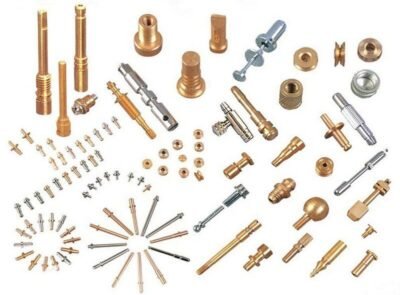
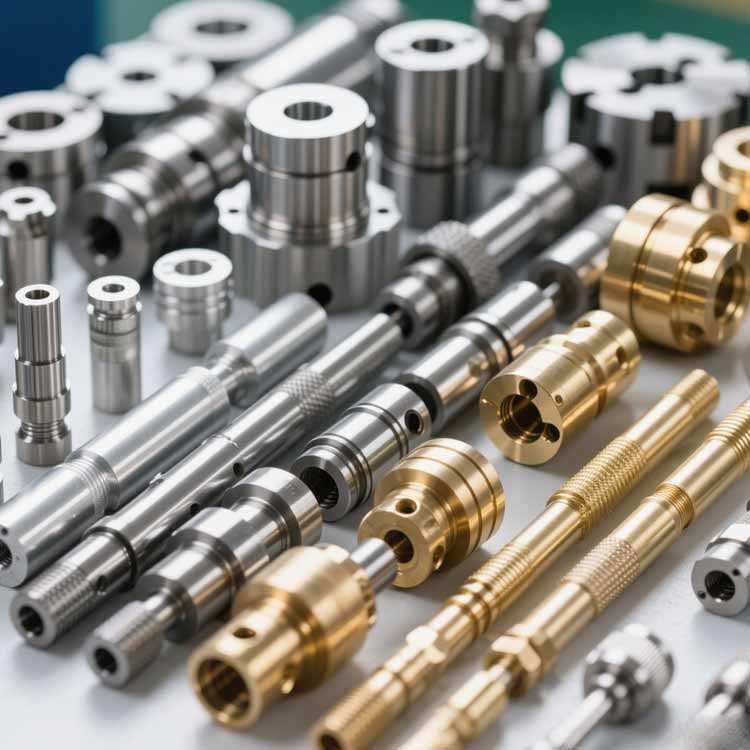
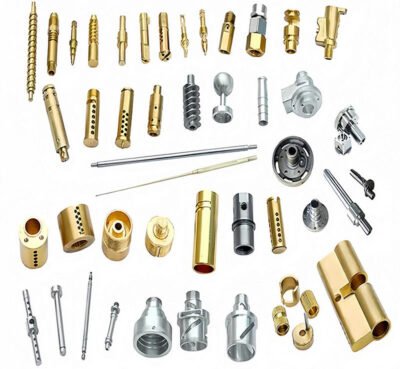
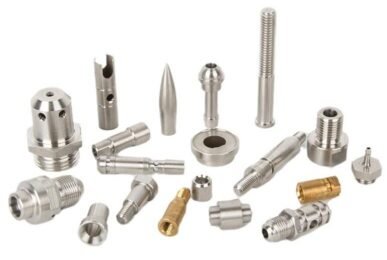
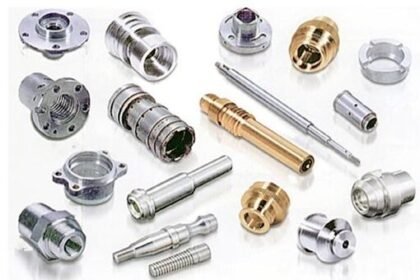
In the field of precision manufacturing, Swiss-Type Lathes (also known as “Swiss Screw Machines”) have become the “core equipment” for high-end industries such as aerospace, medical devices, and electronic communications, thanks to their superior capabilities in machining small-diameter, slender, and complex non-standard components. For enterprises pursuing ±0.001mm tolerance and batch consistency, mastering the core principles of Swiss-Type Lathe machining is not only a prerequisite for ensuring quality but also a key to enhancing competitiveness.
As a professional precision CNC machining service provider, Zomwave relies on years of experience in Swiss-Type Lathe machining, perfectly adapting to the processing needs of complex non-standard components with diameters of 1-38mm and length-diameter ratios of up to 30:1. Today, from a practical perspective, we will break down the 6 core principles that must be followed in Swiss-Type Lathe machining to help you avoid processing mistakes and achieve stable delivery of precision components.
I. Rigid Clamping and Guiding Principle: The Foundation for Non-Deformation of Slender Components
One of the core advantages of Swiss-Type Lathe machining is handling slender shaft components (length-diameter ratio > 10:1). However, such components are prone to vibration and deformation during processing, directly affecting precision. Therefore, “rigid clamping + precise guiding” is the foundation of all principles.
Core Logic:
Through the unique “guide bushing + collet” design, the distance between the tool and the machining area is minimized, improving the rigidity of component clamping and eliminating machining errors at the source.
Practical Points:
Precise Guide Bushing Matching: Select guide bushings according to the component diameter and material (clearance ≤ 0.002mm). Carbide guide bushings are suitable for high-hardness materials (such as titanium alloys), and precision steel guide bushings are suitable for stainless steel to avoid excessive friction between the guide bushing and the component.
Collet Precision Control: Adopt high-precision spring collets with runout ≤ 0.001mm to ensure uniform clamping force and prevent component slippage or local deformation.
Auxiliary Support for Extra-Long Components: For components with a length-diameter ratio > 20:1 (such as slender shafts for medical implants), add a live center tailstock for dual-end support to reduce deflection during high-speed rotation.
Customer Value:
Ensure no deformation during the processing of slender shaft components, stably maintain ±0.001mm tolerance, and meet the assembly requirements of precision components such as aerospace hydraulic pins and medical surgical instruments.
II. Tool Path Optimization and Integration Principle: The Core Code for Efficient Machining
The “integrated machining” capability of Swiss-Type Lathes is the core of their efficiency—it can complete multiple processes such as turning, milling, drilling, tapping, and deburring simultaneously. However, unreasonable tool layout and path planning can lead to low processing efficiency and secondary damage to components.
Core Logic:
By optimizing tool layout and planning reasonable cutting paths, reduce tool change time and cutting force, realize “one-time clamping, full-process forming”, and improve efficiency while ensuring precision.
Practical Points:
Rational Tool Layout: Scientifically arrange tools such as turning tools, milling tools, and drills on the turret and gang slide, optimize the tool access angle, and avoid inter-process interference (for example, use right-angle milling tools to improve accessibility when processing φ0.1mm cross holes).
Lightweight Cutting Path: Adopt the strategy of “light cutting + high-speed machining” for slender components. The cutting speed of stainless steel is controlled at 150-250m/min, and that of aluminum alloy at 300-500m/min to reduce cutting heat and component deformation.
Process Integration: Integrate multiple processes into one clamping to avoid component repositioning errors. Compared with traditional lathes, the efficiency is improved by 30-50% (such as the integrated “turning + drilling + tapping” processing of micro connectors).
Customer Value:
Efficiently complete the processing of complex non-standard components, ensure batch consistency, shorten the delivery cycle, and reduce the customer’s supply chain management costs.
III. Micron-Level Tolerance Control Principle: The Lifeline of Precision Machining
For target customers of Swiss-Type Lathe machining, “precision” is an uncompromising core demand. Whether it is the ±0.005mm tolerance of medical implants or the Ra≤0.025μm surface finish of aerospace components, a full-process tolerance control system is required.
Core Logic:
Control the key factors affecting precision throughout the entire process from equipment calibration, parameter adjustment to real-time inspection to ensure that each component meets the tolerance requirements.
Practical Points:
Daily Equipment Calibration: Calibrate spindle runout and guideway straightness with a laser interferometer daily to ensure the equipment positioning accuracy ≤ 0.0005mm.
Precise Parameter Adjustment: Adjust cutting speed, feed rate, and depth of cut according to material characteristics—reduce the feed rate for titanium alloys (0.005-0.02mm/rev) to reduce tool wear, and increase the speed for PEEK materials (200-300m/min) to avoid melting.
Real-Time Inspection and Compensation: Integrate a probing system to automatically measure key dimensions during processing and real-time compensate for errors caused by tool wear or temperature; use Coordinate Measuring Machine (CMM) and surface roughness tester for dual inspection of finished products to ensure tolerance and surface finish meet standards.
Customer Value:
Meet the strict precision requirements of high-end industries, eliminate rework caused by substandard precision, and reduce the customer’s quality risks.
IV. Material Adaptation and Tool Matching Principle: Customized Machining Solutions for Different Materials
Swiss-Type Lathe machining covers various materials such as stainless steel, titanium alloy, aluminum alloy, and PEEK. Different materials have great differences in physical properties (hardness, melting point, toughness). Improper selection of tools and parameters will lead to tool damage and component scrapping.
Core Logic:
Match exclusive tools and cutting parameters according to material characteristics to achieve precise “material-specific” machining, avoiding material damage and tool loss.
Practical Points (Material-Tool-Parameter Matching Table):
Material Type | Recommended Tool Material | Core Cutting Parameters | Applicable Scenarios |
Stainless Steel (304/316/630) | Carbide/TiAlN-Coated Tools | Speed: 150-250m/min; Feed Rate: 0.01-0.03mm/rev | Medical Devices, Aerospace Fasteners |
Titanium Alloy (Ti6Al4V) | PCBN/Polycrystalline Diamond (PCD) Tools | Speed: 80-120m/min; Feed Rate: 0.005-0.02mm/rev | Orthopedic Implants, High-Temperature Components |
Aluminum Alloy (6061/7075) | Uncoated Carbide Tools | Speed: 300-500m/min; Feed Rate: 0.03-0.08mm/rev | Electronic Connectors, Automotive Precision Components |
Engineering Plastics (PEEK/PTFE) | PCD Tools | Speed: 200-300m/min; Feed Rate: 0.02-0.05mm/rev | Medical Catheters, Precision Instrument Components |
Customer Value:
Realize stable processing of non-standard components of multiple materials, avoid quality problems caused by improper material adaptation, and expand the customer’s component design space.
V. Process Synergy and Surface Treatment Adaptation Principle: The Closed-Loop Guarantee for Full-Process Quality
Swiss-Type Lathe machining is not an isolated process. Pre-processing (material selection, heat treatment) and post-processing (surface treatment such as electrolytic polishing and PVD coating) will affect the final component performance. Ignoring process synergy will lead to poor component compatibility and substandard performance.
Core Logic:
Open up the entire “pre-processing – machining – post-processing” link to ensure the coordinated adaptation of each process and realize the quality closed loop of components from design to finished products.
Practical Points:
Pre-Process Synergy: Cooperate with material suppliers to ensure the straightness of raw materials ≤ 0.01mm/m (a key requirement for slender components); perform annealing treatment on materials such as stainless steel to reduce internal stress.
Post-Process Adaptation: Reserve surface treatment allowance during processing (such as 0.005-0.01mm for electrolytic polishing) to ensure the surface roughness Ra≤0.4μm to improve PVD coating adhesion.
Full-Link Traceability: Assign a unique batch ID to each component, track the material source, processing parameters, inspection data, and surface treatment records to meet the traceability requirements of ISO 13485/AS9100.
Customer Value:
Provide a one-stop solution of “machining + surface treatment”, avoid compatibility problems between processes, simplify the customer’s procurement process, and meet industry compliance requirements.
VI. Compliance and Quality System Principle: The Pass for Access to High-End Industries
The core customers of Swiss-Type Lathe machining are concentrated in strictly regulated industries such as medical and aerospace. These industries have mandatory requirements on the compliance (such as biocompatibility, corrosion resistance) and quality system of components. Therefore, compliance is the “bottom-line principle” of machining.
Core Logic:
Integrate international standards (ISO 13485/AS9100/ASTM) into the entire machining process, and ensure that components meet industry regulatory requirements through standardized management and document control.
Practical Points:
Strict Compliance with Standards: Medical components are processed in accordance with ISO 13485 standards to ensure biocompatibility; aerospace components meet AS9100 and ASTM B117 salt spray test requirements.
Comprehensive Document Control: Retain processing parameters, inspection reports, and tool maintenance records for each batch, and provide customers with complete quality files to facilitate industry audits.
Continuous Optimization and Improvement: Use Statistical Process Control (SPC) to analyze machining data, identify quality fluctuation trends, and control the defect rate to ≤ 0.1%.
Customer Value:
Help customers avoid industry compliance risks, ensure that components pass market access audits smoothly, and expand the global high-end market.
Conclusion: Swiss-Type Lathe Machining – Precision Comes from Principles, Quality Lies in Details
The core competitiveness of Swiss-Type Lathe machining lies in the ultimate control of “precision” and “complexity”, all of which are based on the above 6 core principles. From the basic guarantee of rigid clamping to the bottom-line control of the compliance system, the rigor of every link is the key to achieving micron-level precision and stable batch delivery.
If you have processing needs for small-diameter, slender-shaft, and complex non-standard components, whether they are medical implants, aerospace hydraulic components, or electronic micro-connectors, Zomwave can provide you with customized solutions relying on mature Swiss-Type Lathe machining technology and full-process quality control system.
Upload your component drawing now, and our engineers will provide you with a free process evaluation and quotation within 24 hours!