The global energy transition, coupled with the demand for stable, efficient energy supply, has raised unprecedented standards for energy equipment manufacturing. CNC (Computer Numerical Control) precision machining stands as a critical pillar in this sector, enabling the production of high-performance components that withstand extreme operating conditions—from high-temperature power generation systems to offshore wind turbines and high-pressure oil & gas equipment. This blog explores the vital role of CNC precision machining in the energy equipment industry, core technical requirements, key machining technologies, typical applications, and rigorous quality assurance systems.
Core Requirements for CNC Precision Machining in Energy Equipment
Energy equipment operates in harsh and variable environments (extreme temperatures, high pressure, corrosion, and continuous vibration). As such, CNC precision machining in this industry must meet four non-negotiable core requirements:
Ultra-Precision & Dimensional Stability: Critical tolerances as tight as ±0.001mm, with strict control over geometric accuracy (e.g., flatness ≤0.002mm for turbine diaphragms). Components must maintain dimensional stability across a wide temperature range (-40°C to 600°C+) and long-term operation cycles.
High-Performance Material Adaptability: Proficiency in machining difficult-to-cut energy-grade materials, including nickel-based superalloys (Inconel 625/718 for gas turbines), titanium alloys (for offshore wind components), high-strength steel (for oil & gas wellheads), and composite materials (for solar panel structures).
Corrosion & Wear Resistance: Machined surfaces and structures must resist corrosion (from seawater, oil, or chemical media) and wear (from continuous mechanical friction). Precision post-processing is essential to enhance surface integrity and extend component lifespan.
Strict Industry Compliance: Full adherence to energy industry standards, such as API (American Petroleum Institute) for oil & gas equipment, ISO 9001 for general quality management, and IEC (International Electrotechnical Commission) for renewable energy components. Complete traceability of materials, processes, and testing data is mandatory.
Key CNC Precision Machining Technologies for Energy Equipment
The complex geometries, high-performance material properties, and extreme operating demands of energy equipment drive the adoption of advanced, specialized CNC machining technologies:
1. Five-Axis Simultaneous Machining
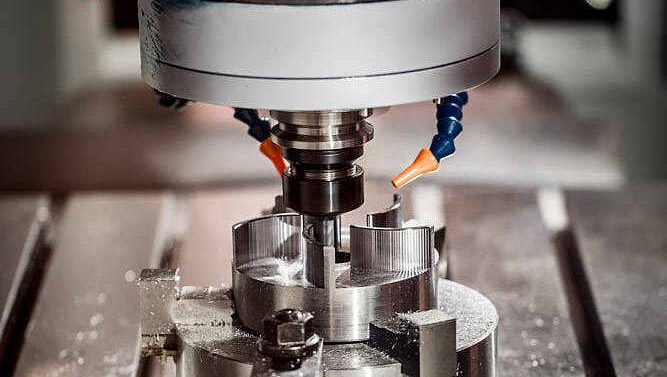
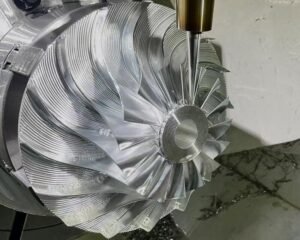
Applicable to: Gas turbine blades, wind turbine hubs, hydraulic turbine runners, and oil & gas valve bodies. Core Advantages: Single-setup machining of complex curved surfaces and multi-angle features eliminates cumulative positioning errors. Achieves contour precision of ±0.0015mm, ensuring optimal aerodynamic/hydraulic performance and structural integrity.
2. Heavy-Duty CNC Machining
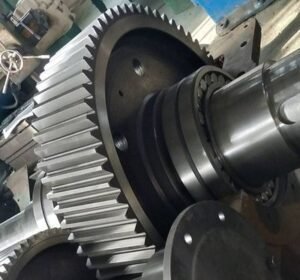
Applicable to: Large-scale energy components (e.g., wind turbine main shafts, steam turbine casings, oil & gas wellhead manifolds). Core Advantages: Equipped with high-rigidity machine tools and heavy-load spindles, capable of machining components weighing up to tens of tons. Maintains high precision even for large-size workpieces (dimensional deviation ≤±0.003mm/m).
3. High-Speed & High-Efficiency Machining
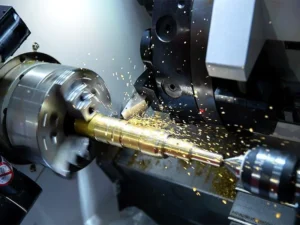
Applicable to: Mass-produced energy components (e.g., solar panel brackets, battery storage casings, small oil & gas connectors). Core Advantages: Cutting speeds up to 500m/min reduce machining time by 30-50%, improving production efficiency for renewable energy components. Minimizes thermal deformation of thin-walled structures (wall thickness ≥0.15mm).
4. Precision Post-Processing Technologies
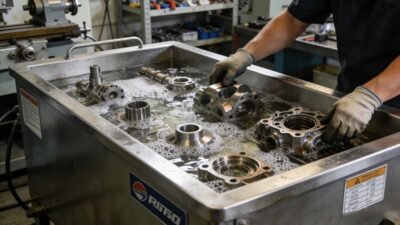
Core Processes: Creep feed grinding, electrolytic polishing (Ra≤0.05μm), plasma spraying (for wear resistance), and stress relief heat treatment. Core Advantages: Enhances surface finish, eliminates residual machining stress, and improves corrosion/wear resistance—critical for components operating in harsh energy environments.
Typical Applications of CNC Precision Machining in Energy Equipment
1. Renewable Energy Equipment (Wind & Solar)
Representative Products: Wind turbine main shafts, hubs, blade roots, solar panel aluminum brackets, and photovoltaic inverter housings. Key Highlights: Heavy-duty CNC machining for wind turbine large components (ensuring load-bearing capacity); high-speed machining for solar brackets (mass production efficiency); corrosion-resistant anodizing for outdoor operation.
2. Thermal & Gas Turbine Equipment
Representative Products: Gas turbine blades, steam turbine diaphragms, turbine casings, and fuel nozzles. Key Highlights: Five-axis machining of superalloy components (ensuring aerodynamic precision); creep feed grinding for surface finish (Ra≤0.02μm); stress relief treatment to withstand high-temperature cyclic operation.
3. Oil & Gas Exploration Equipment
Representative Products: Wellhead manifolds, gate valves, drill collars, and downhole tools. Key Highlights: Machining of high-strength steel and corrosion-resistant alloys; precision drilling of high-pressure holes (tolerance ±0.001mm); compliance with API 6A/6D standards for pressure resistance and leak tightness.
4. Energy Storage Equipment
Representative Products: Battery cell casings, energy storage container frames, and electrode current collectors. Key Highlights: High-speed machining of aluminum/copper alloys (ensuring high conductivity); thin-walled structure optimization (weight reduction by 20-25%); RoHS-compliant processes for environmental safety.
Quality Control & Compliance in Energy Equipment CNC Machining
Success in energy equipment CNC machining relies on advanced technology paired with rigorous, end-to-end quality control and industry compliance:
Material Certification: All raw materials require energy-grade certification (e.g., AMS 5662 for Inconel 718, API 5CT for oil & gas steel) and 100% non-destructive testing (NDT) via ultrasonic, X-ray, or magnetic particle inspection to detect internal defects.
In-Process Monitoring: Real-time inspection via automated CMM (Coordinate Measuring Machine), laser interferometers, and force sensors. First-Article Inspection (FAI) is mandatory for critical components to validate process stability.
Finished Product Validation: Fatigue testing, high-temperature/pressure performance testing, and corrosion resistance testing (salt spray, seawater immersion). Full compliance with API, ISO, and IEC standards.
Traceability: Comprehensive data logging of material batches, machining parameters, tooling usage, and testing results—ensuring full traceability for every component throughout its service life.
Conclusion
CNC precision machining is an indispensable enabler of the global energy transition and stable energy supply, providing the high-precision, reliable components that underpin both traditional and renewable energy systems. As the energy industry evolves toward cleaner, more efficient solutions (e.g., offshore wind, hydrogen energy, advanced nuclear power), CNC machining will continue to advance—with greater integration of digital twin technology, AI-driven process optimization, and composite material machining capabilities—to meet the industry’s growing demands.
For custom CNC precision machining needs of energy equipment components (e.g., wind turbine parts, turbine blades, oil & gas wellhead components), we provide tailored solutions covering material selection, process routing, and full industry compliance. Contact us to discuss your project requirements.