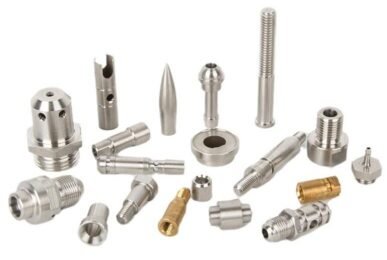
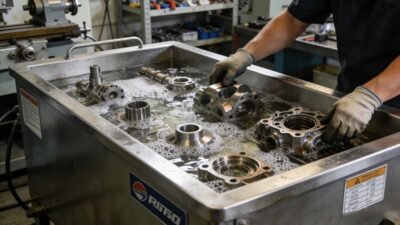
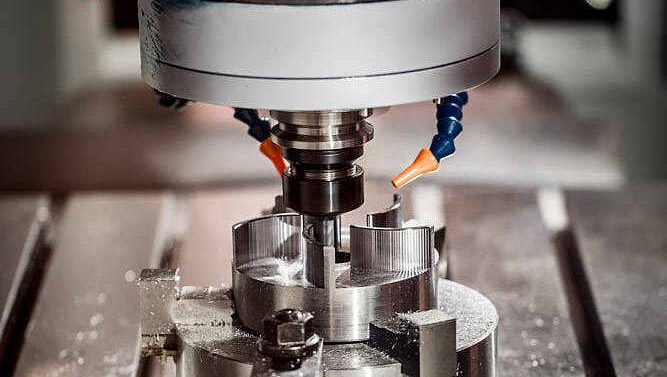
The automotive industry is undergoing a profound transformation, with a dual focus on enhancing driving safety, improving fuel efficiency, and accelerating electrification. CNC (Computer Numerical Control) precision machining has become an irreplaceable core technology in automotive manufacturing, enabling the production of high-reliability components that withstand harsh operating conditions—from traditional engine and transmission systems to new energy vehicle (NEV) battery packs and electric drive modules. This blog explores the critical role of CNC precision machining in the automotive sector, core technical requirements, key technologies, typical applications, and rigorous quality compliance systems.
Core Requirements for CNC Precision Machining in Automotive Industry
Automotive components operate under dynamic loads, extreme temperatures, and long-term cyclic use, making CNC machining in this industry subject to four non-negotiable core requirements:
High Batch Consistency & Scalability: Strictly uniform quality across mass production runs (100,000+ units per model) to ensure interchangeability. Dimensional deviation between batches must be ≤±0.002mm, critical for efficient assembly lines and stable vehicle performance.
Durability & Extreme Condition Resistance: Components must withstand temperature fluctuations (-40°C to 150°C), vibration, and corrosion (from road salt, moisture). Machined surfaces require high wear resistance (surface roughness Ra≤0.02μm) for moving parts like gears and shafts.
Lightweight & High-Strength Material Adaptability: Proficiency in machining lightweight materials (aluminum alloys 6061/7075, magnesium alloys) to reduce vehicle weight and improve fuel efficiency/electric range. Also adept at hard-to-cut materials (hardened steel, cast iron) for engine and chassis components, and composites for NEV structural parts.
Strict Industry Compliance: Full adherence to automotive quality standards such as IATF 16949, ISO 9001, and PPAP (Production Part Approval Process). Complete traceability of materials, processes, and testing data is mandatory to support recalls and quality audits.
Key CNC Precision Machining Technologies for Automotive Applications
The diverse component geometries, mass production demands, and material characteristics of automotive parts drive the adoption of specialized CNC machining technologies:
1. High-Speed Precision Machining
Applicable to: Mass-produced components (engine cylinder heads, aluminum alloy wheel hubs, NEV battery tray frames). Core Advantages: Cutting speeds up to 600m/min reduce machining time by 40-60%, meeting high-volume production needs. Minimizes thermal deformation of thin-walled parts (e.g., battery tray walls ≥0.8mm), ensuring dimensional stability.
2. Five-Axis Simultaneous Machining
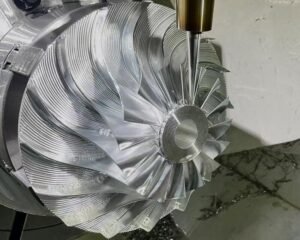
Applicable to: Complex components (engine blocks, transmission casings, steering knuckles, NEV motor housings). Core Advantages: Single-setup machining of multi-angle surfaces and internal cavities eliminates cumulative positioning errors. Achieves contour precision of ±0.0015mm, ensuring optimal fit of engine/transmission assemblies and efficient power transmission.
3. Turn-Mill Composite Machining
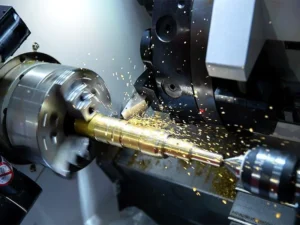
Applicable to: Rotating automotive components (crankshafts, camshafts, drive shafts, CV joints). Core Advantages: Integrates turning, milling, drilling, and tapping in one setup, reducing handling time by 30-50%. Improves coaxiality (≤0.002mm) and surface finish, critical for smooth rotation and reduced noise/vibration.
4. Precision Post-Processing Technologies
Core Processes: Anodizing (for aluminum components to enhance corrosion resistance), nitriding (for steel gears to improve wear resistance), honing (for engine cylinder bores), and laser engraving (for part traceability codes). Core Advantages: Enhances component lifespan, meets safety requirements, and supports compliance with automotive traceability standards.
Typical Applications of CNC Precision Machining in Automotive Industry
1. Traditional Internal Combustion Engine (ICE) Components
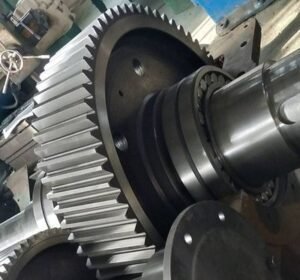
Representative Products: Engine blocks, cylinder heads, crankshafts, camshafts, transmission casings and gears. Key Highlights: Machined from cast iron, hardened steel, and aluminum alloys via five-axis and turn-mill machining. Strict control of bore precision (tolerance ±0.001mm) and gear tooth profile accuracy to ensure engine efficiency and transmission smoothness.
2. New Energy Vehicle (NEV) Components
Representative Products: Battery tray frames, electric motor housings, inverter casings, drive shafts for electric powertrains. Key Highlights: High-speed machining of aluminum/magnesium alloys for lightweight battery trays (weight reduction by 25-30% vs. steel); five-axis machining for motor housings to ensure tight fit with stator/rotor; EMC-compliant structures to avoid interference with electronic systems.
3. Chassis & Safety Components
Representative Products: Steering knuckles, control arms, brake calipers, suspension brackets. Key Highlights: Machined from high-strength steel and aluminum alloys; precision drilling and milling for bolted joints (tolerance ±0.001mm) to ensure structural rigidity and driving safety; corrosion-resistant post-processing for outdoor operation.
4. Body & Exterior Components
Representative Products: Aluminum alloy wheel hubs, door hinge brackets, decorative trim frames. Key Highlights: High-speed machining for wheel hub precision (runout ≤0.003mm) to reduce vibration; anodized/polished surfaces for aesthetics and corrosion resistance; batch consistency to ensure uniform appearance across vehicle bodies.
Quality Control & Compliance in Automotive CNC Machining
Success in automotive CNC machining relies on advanced technology paired with rigorous, end-to-end quality control:
Material Certification: All raw materials require automotive-grade certification (e.g., AMS 6061 for aluminum, ASTM A36 for steel) with 100% compositional and defect testing (ultrasonic, X-ray inspection).
In-Process Monitoring: Automated online inspection via CMM (Coordinate Measuring Machine), vision systems, and laser scanners. 100% inspection of critical safety components; statistical process control (SPC) for mass-produced parts to maintain stability.
Finished Product Validation: Fatigue testing (for chassis parts), high-temperature/vibration testing (for engine components), and corrosion testing (salt spray test ≥500 hours). Full compliance with IATF 16949 and PPAP requirements.
Traceability: Comprehensive data logging of material batches, machining parameters, tooling changes, and testing results—each component is traceable to its production batch and process details.
Conclusion
CNC precision machining is a cornerstone of modern automotive manufacturing, underpinning the safety, efficiency, and innovation of both traditional and new energy vehicles. As the industry advances toward electrification, autonomous driving, and lightweight design, CNC machining will continue to evolve—with greater integration of AI-driven process optimization, digital twin technology, and multi-material machining capabilities—to meet the growing demands of next-generation automotive systems.
For custom CNC precision machining needs of automotive components (e.g., engine parts, NEV battery trays, chassis components), we provide tailored solutions covering material selection, process routing, and full IATF 16949 compliance. Contact us to discuss your project requirements.