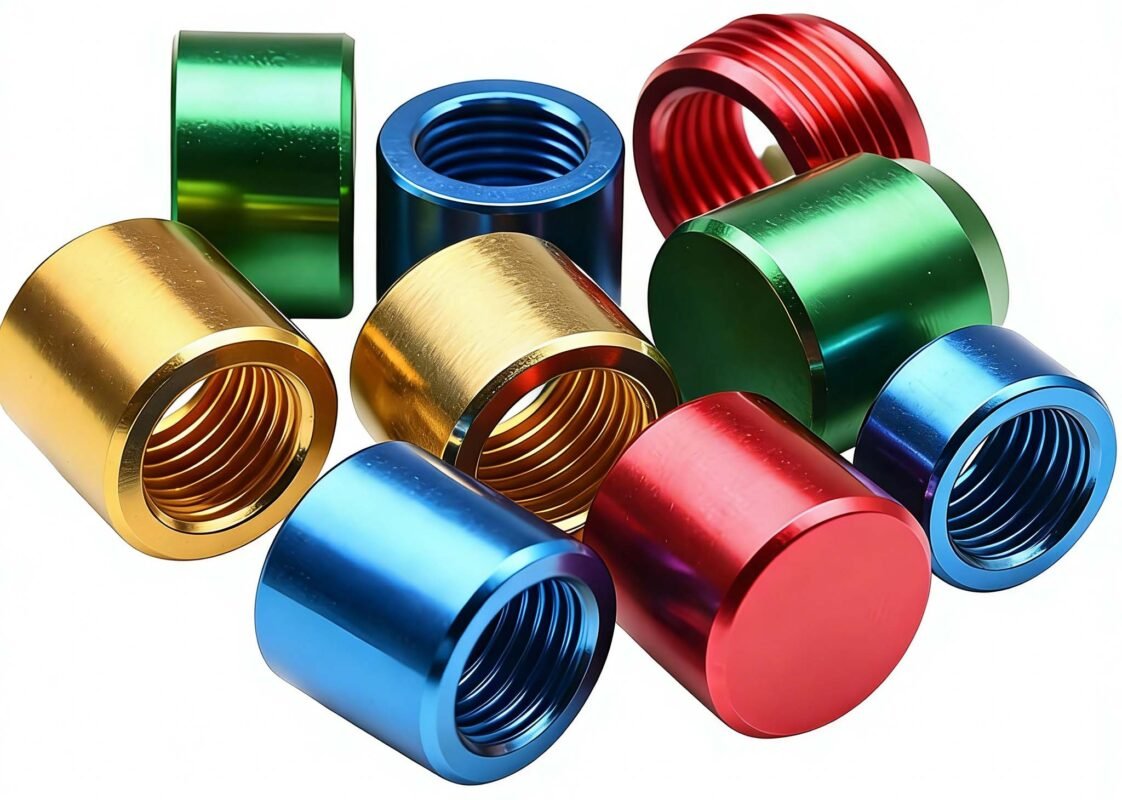
CNC precision machining lays the foundation for high-accuracy, complex components across industries, but the journey to optimal performance often ends with a critical post-processing step: anodizing. As an electrolytic passivation process, anodizing forms a hard, corrosion-resistant oxide layer on metal surfaces—most commonly aluminum, a material widely used in CNC machining for its lightweight and machinability. This blog explores the symbiotic relationship between CNC precision machining and post-processing anodizing, core benefits, key process considerations, typical applications, and quality assurance standards that define this essential manufacturing combination.
Why Anodizing Is Indispensable After CNC Precision Machining
CNC precision machining delivers tight tolerances and complex geometries, but the raw machined surface of metals like aluminum lacks the durability and protection needed for harsh operating environments. Anodizing complements CNC machining by addressing these gaps, offering four core value propositions:
Superior Corrosion Resistance: The anodic oxide layer (typically 5-25μm thick, up to 100μm for hard anodizing) acts as a barrier against moisture, chemicals, road salt, and industrial contaminants. This is critical for components exposed to outdoor or harsh industrial conditions, extending service life by 3-5 times compared to uncoated parts.
Enhanced Surface Hardness: The oxide layer (Hardness ≥HV300 for standard anodizing, ≥HV500 for hard anodizing) significantly improves wear resistance, protecting precision machined surfaces from scratches, abrasion, and mechanical friction—ideal for moving parts like CNC-machined gears, shafts, and sliding components.
Preservation of Precision: Unlike thick coatings that can alter dimensional accuracy, anodizing forms a thin, uniform layer that maintains the tight tolerances (±0.001mm) achieved by CNC machining. Advanced process control ensures the oxide layer does not compromise the component’s fit or functional performance.
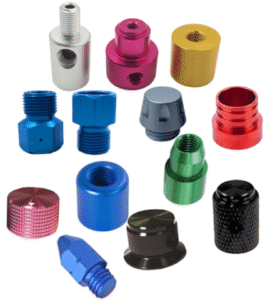
Versatile Aesthetics & Functionality: Anodized surfaces can be dyed in a wide range of colors (black, silver, blue, etc.) for aesthetic or branding purposes, while also enabling additional functional treatments (e.g., lubricant impregnation for low-friction applications).
Key Process Considerations for Anodizing CNC Precision Machined Parts
To maximize the benefits of anodizing without compromising CNC-machined precision, careful process planning and control are essential. Four critical considerations define successful integration:
1. Pre-Anodizing Surface Preparation
CNC-machined parts require thorough cleaning and surface preparation to ensure uniform oxide layer formation. This includes degreasing (to remove machining oils), pickling (to eliminate surface oxides), and rinsing—all performed with mild chemicals to avoid etching or damaging the precision machined surfaces. Surface roughness (Ra) of the CNC-machined part should be controlled to ≤0.05μm for optimal oxide adhesion.
2. Matching Anodizing Parameters to CNC Machined Materials
Aluminum alloys (the primary material for anodizing) vary in composition, and anodizing parameters (voltage, current density, electrolyte temperature) must be tailored to the specific alloy used in CNC machining. For example: - 6061/6063 aluminum (common in automotive/electronic components): Sulfuric acid anodizing at 12-18V, 18-22°C for 20-40 minutes. - 7075 aluminum (high-strength, used in aerospace): Hard anodizing at 18-25V, 0-5°C for 60-90 minutes to achieve a thicker, harder oxide layer.
3. Dimensional Control During Anodizing
The anodic oxide layer grows both outward and inward from the metal surface. For CNC-machined parts with tight tolerances, manufacturers must account for this growth (typically 0.5-1.5μm per side) during the machining stage. Pre-machining dimensions are adjusted to ensure the final anodized part meets the required specifications, avoiding fit issues in assembly.
4. Post-Anodizing Sealing
After anodizing, parts undergo a sealing process (hot water, steam, or chemical sealing) to close the porous oxide layer. This step enhances corrosion resistance and prevents dye fading (for colored parts). For precision components, sealing parameters are controlled to avoid dimensional changes—critical for parts like CNC-machined sensor housings and electronic connectors.
Typical Applications of Anodized CNC Precision Machined Parts
The combination of CNC precision machining and anodizing is widely adopted across industries where precision, durability, and corrosion resistance are non-negotiable. Key applications include:
1. Automotive Industry
Representative Products: CNC-machined aluminum wheel hubs, NEV battery tray frames, steering knuckle components, decorative trim. Key Benefits: Corrosion resistance against road salt and moisture; wear resistance for moving parts; lightweight design preservation to improve fuel efficiency/electric range.
2. Electronics & Telecommunications
Representative Products: CNC-machined smartphone middle frames, 5G antenna brackets, sensor housings, laptop chassis. Key Benefits: Electrical insulation (oxide layer is non-conductive); scratch resistance for consumer-facing surfaces; aesthetic customization with dyed colors.
3. Aerospace Industry
Representative Products: CNC-machined aluminum structural components, avionic housings, hydraulic system parts. Key Benefits: High corrosion resistance for extreme environments (humidity, temperature fluctuations); enhanced wear resistance for long-term reliability; lightweight properties maintained.
4. Robotics & Industrial Equipment
Representative Products: CNC-machined robot arm links, end effector components, conveyor system parts. Key Benefits: Wear resistance for repetitive motion; corrosion resistance in industrial environments; low-friction surface options for moving joints.
Quality Control & Standards for Anodized CNC Precision Parts
Success in combining CNC precision machining and anodizing relies on rigorous quality control to ensure both dimensional accuracy and oxide layer performance. Key standards and testing methods include:
Standards Compliance: Adherence to industry standards such as MIL-A-8625 (military anodizing), ISO 7599 (aluminum anodizing), and automotive-specific standards (IATF 16949) for process consistency.
Oxide Layer Testing: Thickness measurement (via eddy current or microscopical methods), hardness testing (Vickers hardness), and corrosion resistance testing (salt spray test ≥500 hours for automotive/aerospace parts).
Dimensional Verification: Post-anodizing inspection via CMM (Coordinate Measuring Machine) to confirm tolerances are maintained, ensuring compatibility with assembly requirements.
Surface Quality Inspection: Visual inspection for defects (cracks, uneven coloring) and surface roughness measurement (Ra ≤0.05μm) to ensure consistent performance and aesthetics.
Conclusion
Anodizing after CNC precision machining is more than a post-processing step—it is a strategic enhancement that unlocks the full potential of precision-machined metal components. By combining the accuracy of CNC machining with the durability, corrosion resistance, and versatility of anodizing, manufacturers can deliver parts that meet the most demanding industry requirements. As industries evolve toward lightweight, high-performance designs, the synergy between these two technologies will remain a cornerstone of advanced manufacturing.
For custom CNC precision machining and anodizing solutions (e.g., automotive, electronic, aerospace components), we provide tailored processes covering material selection, machining precision control, and anodizing parameter optimization. Contact us to discuss your project requirements.