Blog
Standard Parts and Non-Standard Parts
Standard parts and non-standard parts are widely used terminology in the engineering and manufacturing sector.
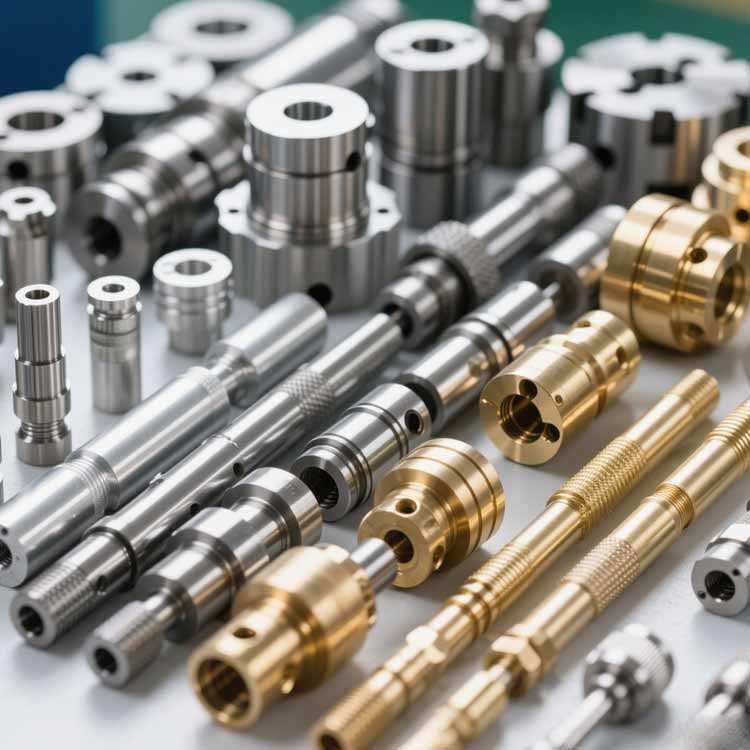
Standard parts refer to components or products that adhere to national or industry standards and specifications. They feature unified requirements for dimensions, structure, materials, and performance, enabling interchangeability across different manufacturers. The design and production of standard parts typically follow a set of established criteria to guarantee their quality and reliability. Common examples include bolts, nuts, and bearings.
Non-standard parts, also known as custom-manufactured parts, are components or products that do not conform to standard specifications. They are usually designed and produced based on specific project requirements, with unique shapes, dimensions, or functions. Non-standard parts are applicable to special engineering projects or specific application scenarios, requiring customized production tailored to actual needs. For instance, gears with special configurations and seals of specific dimensions fall into the category of non-standard parts.
Both standard and non-standard parts play a crucial role in engineering design and manufacturing. The adoption of standard parts enhances product interchangeability and substitutability, reduces design and production costs, and shortens the manufacturing cycle. On the other hand, non-standard parts can meet specialized requirements and provide more optimized customized solutions. In practical applications, engineers need to select either standard or non-standard parts based on specific circumstances to achieve the optimal design outcome and economic benefit.
When selecting between standard and non-standard parts, the following aspects should typically be taken into consideration:
1. Design Requirements: First and foremost, it is essential to clarify the design requirements of the product or system. If standard components can meet the design requirements with sufficient performance and reliability, opting for standard components is generally more appropriate. If the design imposes special demands on dimensions, shapes, materials, or requires the achievement of specific functions, non-standard parts may be a more suitable choice.
2. Substitutability and Interchangeability: A key characteristic of standard parts is their interchangeability, meaning that the same type of standard parts produced by different manufacturers can be mutually replaced. This interchangeability improves the flexibility and reliability of the supply chain. If components in the product require frequent replacement or maintenance, choosing standard parts will facilitate these processes. In contrast, non-standard parts are usually designed and manufactured for specific needs and may not be directly replaceable.
3. Cost and Lead Time: Standard parts benefit from large-scale production and supply, resulting in relatively low costs and short lead times. If time and cost are critical considerations, or if mass production is required, selecting standard parts is often more cost-effective. Non-standard parts, however, require customized production, which typically involves longer lead times and higher costs.
4. Technical Feasibility: When choosing non-standard parts, it is vital to ensure the feasibility of the required design and manufacturing processes. In some cases, non-standard parts with specific shapes, dimensions, or functions may require specialized processing technologies or materials, which can increase manufacturing complexity and costs. Therefore, a comprehensive technical evaluation and feasibility analysis should be conducted before finalizing the selection of non-standard parts.
In summary, the selection between standard and non-standard parts depends on a comprehensive assessment of various factors, including design requirements, cost, lead time, and technical feasibility. Engineers must weigh the advantages and disadvantages based on specific scenarios and make decisions that meet product requirements while achieving the best possible economic benefits.
Related Posts
Applications of Non-Standard Parts in the Real World: 5 Practical Uses You’ll Actually See
Non-standard parts are components specially manufactured by various industries to meet unique design and performance requirements....
CustomNon-Standard Precision Turned Components | Global Industry-Oriented OEM/ODM Solutions
As a seasoned manufacturer specializing in custom non-standard precision turned components, we deeply cultivate the global market ...
Low-Volume Production Benefits Startups
Low-volume production is quietly emerging as a practical shortcut for startups to turn ideas into tangible products without deplet...
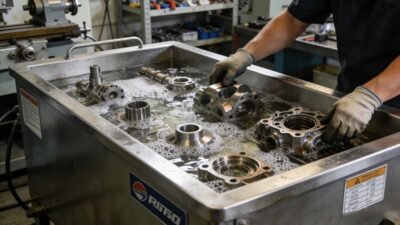
Precision Cleaning: The Critical Role of Ultrasonics in CNC Machined Parts
Precision is the core of CNC machining. However, after milling, turning, or drilling, machined parts typically contain residues—cu...
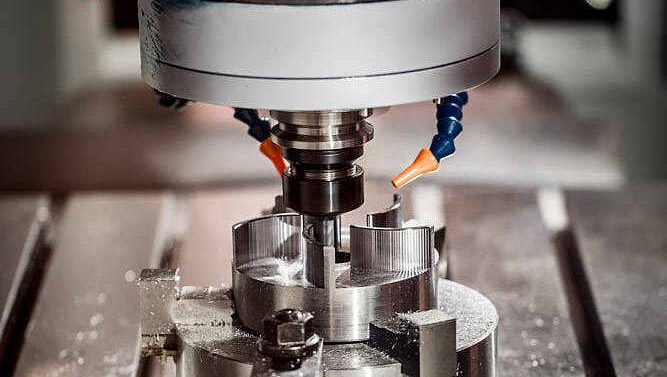
OEM, ODM, and JDM in Modern Manufacturing
In today's global manufacturing landscape, the relationships between designers, technical developers, and production partners are ...
Development Trends and Innovations of Precision Machining Tools
In the unremitting pursuit of higher precision, superior surface finish, and more efficient machining of increasingly complex mate...
Datum in Geometric Dimensioning and Tolerancing
Geometric Dimensioning and Tolerancing (GD&T) is a crucial tool in the engineering field. It ensures that the assembly and fun...
CNC Precision Machining for Automotive Industry: Driving Safety, Efficiency & Electrification
The automotive industry is undergoing a profound transformation, with a dual focus on enhancing driving safety, improving fuel eff...
CNC Precision Machining for Robotics Manufacturing: Powering High-Accuracy Motion & Reliability
The robotics industry is evolving at a rapid pace, with demands for greater precision, flexibility, and durability across industri...

CNC Precision Machining for Energy Equipment Industry: Powering Reliable & Efficient Energy Solutions
The global energy transition, coupled with the demand for stable, efficient energy supply, has raised unprecedented standards for ...
CNC Machining in the Electronics & Telecommunications Industry: Precision for Connected Technologies
The electronics & telecommunications industry is driven by relentless innovation toward miniaturization, high performance, and...
CNC Machining in Aerospace Industry: Precision, Durability, and Regulatory Excellence
The aerospace industry demands uncompromising standards for precision, material durability, and operational safety—standards that ...