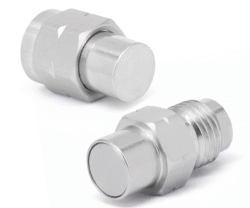
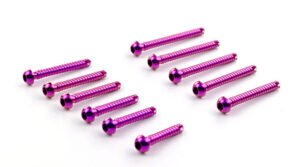
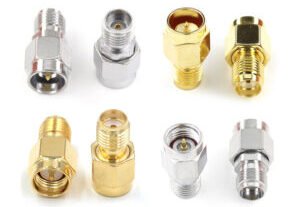
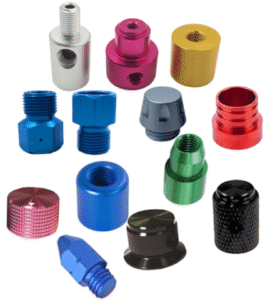
In precision CNC machining, "part forming" is just the first step. Parts post-CNC (milling, turning, drilling) often have burrs, substandard surface roughness, or insufficient corrosion resistance, failing to meet end-use requirements directly. As a critical final step, surface treatment not only repairs defects and improves appearance but also boosts core performance (wear resistance, corrosion resistance, conductivity)—directly determining product lifespan, safety, and market competitiveness. This article breaks down common post-CNC surface treatment processes, application scenarios, and key considerations to help enterprises make accurate selections and avoid risks.
1. Why Post-CNC Machining Surface Treatment Matters
Post-CNC machining (especially high-speed cutting and hard material processing), parts are prone to surface defects: tool marks, burrs, oxide scale, and microcracks from processing stress. These cause multiple risks:
Performance risks: Rough surfaces cause stress concentration and reduced fatigue strength; untreated metal corrodes in harsh environments, leading to failure;
Assembly issues: Burrs and tool marks affect fitting accuracy, even causing jamming;
Appearance defects: Tool marks, discoloration, and oxide spots reduce aesthetics, failing high-end demands (consumer electronics, medical devices);
Safety risks: Sharp burrs may scratch operators/end-users, especially in human-contact products.
High-quality surface treatment resolves these issues, achieving "performance upgrade + quality optimization": e.g., anodizing improves aluminum corrosion resistance, electroplating enhances steel wear resistance, and polishing achieves Ra0.01μm surface roughness for high-end equipment.
2. Common Post-CNC Surface Treatment Processes: Characteristics, Applications & Advantages
Surface performance requirements vary by material (aluminum alloy, stainless steel, steel, etc.) and application (aerospace, medical, electronics). Below are 6 common post-CNC surface treatment processes with key details:
1. Deburring/Chamfering: Basic Pre-Treatment
As the basic post-CNC step, deburring/chamfering removes edge burrs and sharp edges to avoid subsequent processing/assembly issues.
Common methods: Manual (simple parts, small batches), vibratory finishing (small-medium parts, mass production), electrochemical (complex cavities/microholes), laser (high precision);
Applicable materials: All CNC parts, especially stamped/milled metal parts;
Core advantages: Simple, low-cost, improves assembly compatibility and safety;
Notes: Avoid excessive deburring (dimensional deviation); use laser/electrochemical methods for precision parts (removal: 0.01-0.05mm).
2. Polishing: Optimize Surface Finish & Texture
Polishing reduces surface roughness for smooth/mirror texture and repairs minor microdefects.
Common methods: Mechanical (grinding wheel, mass production), chemical (complex shapes), electrolytic (high precision, stainless steel/aluminum), magnetorheological (nanoscale, optical/mold parts);
Applicable materials: Stainless steel, aluminum, copper, plastic (high appearance/precision demands);
Core advantages: Ra0.01-0.1μm surface finish; improves corrosion resistance;
Notes: Reserve 0.02-0.1mm allowance; avoid over-polishing (dimensional deviation).
3. Anodizing: Aluminum Alloy-Specific Performance Upgrade
Anodizing (aluminum-specific) forms a dense oxide film via electrolysis, boosting corrosion resistance, wear resistance, and hardness.
Common methods: Regular (natural/black, general use), hard (thick film, wear-resistant), colored (dyeing, appearance);
Applicable materials: Pure aluminum, alloys (6061, 7075) (aerospace, automotive, electronics, medical);
Core advantages: Controllable film (5-200μm), HV300-500 hardness, 10-20x corrosion resistance;
Notes: Clean oil/oxide scale first; protect blind holes; reserve allowance for hard anodizing.
4. Electroplating: Enhance Wear Resistance & Decoration
Electroplating deposits a metal layer (chrome, nickel, zinc, etc.) via electrolysis to enhance wear resistance, conductivity, or decoration.
Common methods: Chrome (hardness/wear, molds), zinc (corrosion, steel), nickel (corrosion/decoration, electronics), gold/silver (conductivity, precision/aerospace);
Applicable materials: Steel, copper, aluminum (pre-treatment), plastic (metallization);
Core advantages: Targeted performance; zinc plating low-cost for mass steel;
Notes: Clean surfaces for adhesion; control thickness (0.005-0.1mm); choose eco-friendly processes (cyanide-free zinc).
5. Passivation: Low-Cost Rust Prevention for Steel/Stainless Steel
Passivation forms a dense oxide film via chemical/electrochemical methods, ideal for low-cost stainless steel rust prevention.
Common methods: Chemical (nitric/citric acid, stainless steel), electrochemical (precision steel);
Applicable materials: Stainless steel (304, 316L), steel, copper alloys;
Core advantages: Low-cost, no dimensional impact; 5-10x corrosion resistance;
Notes: Clean oil/oxide scale; dry thoroughly; citric acid for medical/food machinery.
6. Coating: Protection & Personalized Appearance
Coating applies powder/liquid paint to form a protective layer, achieving rust prevention and personalized appearance (matte, glossy, textured).
Common methods: Powder (eco-friendly, mass metal), electrophoretic (strong adhesion, automotive), spray (complex shapes, delicate appearance);
Applicable materials: Metal, plastic, wood (automotive, home appliances, industrial enclosures);
Core advantages: Resists acid-alkaline/salt spray/UV; highly personalized;
Notes: Degrease/phosphate for adhesion; control thickness (0.05-0.2mm); consider heat resistance.
3. Core Selection Logic for Post-CNC Surface Treatment
Select processes based on 4 core factors: material, application, performance needs, and budget:
Material: Aluminum → anodizing/polishing; stainless steel → passivation/electrolytic polishing; steel → zinc/chrome plating; plastic → spray/vacuum coating;
Application: Outdoor → corrosion resistance (anodizing, coating, zinc); high-friction → wear resistance (hard anodizing, chrome); precision electronics → conductivity (gold/silver); medical → corrosion resistance + biocompatibility;
Performance priority: Cost-first → passivation/vibratory deburring; appearance-first → polishing/colored anodizing; precision-first → laser/electrolytic polishing;
Budget: Mass production → automated processes; small-batch precision → high-precision methods.
4. Key Considerations for Post-CNC Surface Treatment
Improper treatment may cause scrapping. Focus on these 5 key points:
1. Reserve Machining Allowance in Advance
Processes like polishing/anodizing cause slight material loss. Reserve allowance: polishing (0.02-0.1mm), hard anodizing (0.05-0.1mm), electroplating (0.005-0.02mm). Lack of allowance leads to dimensional deviation.
2. Thorough Pre-Treatment
Thoroughly degrease, derust, and remove oxide scale first. Residual oil/impurities cause poor adhesion (peeling, bubbling). E.g., alkali cleaning for anodizing, degreasing for electroplating.
3. Control Process Parameters to Avoid Deformation
High-temperature processes (hard anodizing, coating) easily deform thin-walled/slender parts. Optimize parameters: lower temperature, extend holding time, or use fixtures.
4. Emphasize Post-Treatment Cleaning & Drying
Clean parts thoroughly post-treatment to avoid residual chemicals (corrosion). Dry promptly to prevent water stains/oxide spots, especially in humid environments.
5. Comply with Environmental & Industry Standards
Choose eco-friendly processes (avoid toxic substances like cyanide). Comply with industry standards: medical (ISO 13485), automotive (IATF 16949), aerospace (AS9100).
5. Conclusion
Post-CNC surface treatment is critical for product quality and competitiveness. Select processes based on material, application, and performance needs. Strictly control pre-treatment, parameters, and post-cleaning to ensure effectiveness.
Optimizing surface treatment improves quality and reduces costs. Cooperate with professional providers for personalized solutions, combining CNC precision with surface treatment performance to maximize product value.