Blog
Advanced Precision Machining: Driving High-Precision Manufacturing Solutions
Amid global manufacturing upgrading, demand for high-precision, reliable components is soaring in aerospace, medical devices, automotive electronics, and precision instrumentation. As the backbone of high-precision manufacturing, advanced precision machining breaks traditional limits in accuracy, efficiency, and complexity. Integrating digital control, material science, and intelligent sensing, it delivers comprehensive high-precision solutions globally, becoming a key driver for enterprises to gain competitive edges.
1. Core of Advanced Precision Machining
Advanced precision machining achieves micron to nanometer-level accuracy via integrated advanced equipment, precision control, and optimized processes. Its core lies in "full-process precision control" and "intelligent adaptation to complex demands", with key indicators including machining accuracy (positional/shape accuracy), surface quality (Ra≤0.01μm), and batch consistency (error ≤±0.002mm). Three core pillars ensure its realization:
- High-performance equipment: Five-axis machining centers, high-speed turning-milling composites, equipped with high-precision linear guides, 60,000 RPM spindles, and Siemens/FANUC high-precision CNC systems.
- Intelligent control: Real-time process monitoring, adaptive cutting parameters, thermal error compensation, and online measurement to minimize external error.
- High-end process matching: PCD/CBN tools, high-pressure cooling, and post-machining finishing to enhance accuracy and surface quality.
2. Key Technologies for High-Precision Solutions
High-precision manufacturing solutions rely on the integration of core advanced technologies, addressing diverse industry demands:
2.1 Five-Axis Linkage Machining Technology
Five-axis linkage machining enables simultaneous 5-axis movement, finishing complex curved surfaces and multi-angle features in one clamping. It avoids multi-clamping cumulative error (positional accuracy ±0.001mm), ideal for aerospace engine blades, medical implants, and precision mold cores.
2.2 High-Speed Precision Cutting Technology
High-speed precision cutting (milling up to 500m/min, turning up to 3000m/min) boosts efficiency by 30%-50% vs. traditional cutting. It reduces cutting force and thermal deformation, ensuring Ra≤0.05μm surface quality, widely used in consumer/automotive electronics mass production (phone middle frames, precision gears).
2.3 Micro-Nano Machining Technology
Micro-nano machining targets sub-1mm components and micro-features (≤0.1mm holes, ≤0.05mm grooves). It achieves nanometer accuracy via ultra-precision tools and micro-measurement, core for micro-sensors, MEMS, and precision medical catheters.
2.4 Digital Twin-Driven Intelligent Machining Technology
Digital twin-driven intelligent machining maps physical processes to digital space. It predicts errors, optimizes parameters, and simulates processes pre-production, reducing trial-cut cycles and ensuring batch consistency in high-precision mass manufacturing.
3. Industry-Tailored High-Precision Solutions
Advanced precision machining integrates into tailored solutions, addressing core pain points across industries:
3.1 Aerospace Industry
Aerospace: Solutions for difficult-to-machine materials (titanium alloy, superalloy) and complex surfaces. Integrate five-axis machining, high-pressure cooling, and online NDT; adopt thermal compensation and rigid clamping (±0.002mm accuracy) to meet AS9100 standards with full traceability.
3.2 Medical Device Industry
Medical Devices: Solutions for biocompatibility, ultra-high precision (≤±0.001mm), and clean manufacturing. Use micro-nano machining and precision polishing for implants (artificial joints) and endoscope components; adopt medical-grade materials (Ti6Al4V, PEEK) and Class 1000 cleanrooms to meet ISO 13485.
3.3 Automotive Electronics Industry
Automotive Electronics: Solutions for high-efficiency mass production and consistency. Combine high-speed cutting with automated lines (robotic loading/unloading); use high-speed drill-tapping centers (batch error ≤±0.003mm) to meet IATF 16949 standards for sensor cores and connectors.
4. Core Advantages of Advanced Precision Machining Solutions
Compared with traditional solutions, advanced precision machining offers distinct advantages for quality and efficiency improvement:
- Ultra-high accuracy: Stable micron-nanometer level, meeting high-end core component demands.
- Efficiency boost: 30%-60% shorter machining cycles via one-time clamping and intelligent optimization, suitable for small-batch, multi-variety production.
- Strong adaptability: Processes diverse materials (difficult metals, plastics, composites) and complex structures with customized processes.
- Cost optimization: Reduces clamping, trial-cut times, and scrap rate, optimizing full-process costs from design to mass production.
4. Conclusion: The Future of High-Precision Manufacturing
Advanced precision machining is the cornerstone of high-precision manufacturing. Integrating AI, digital twin, and IoT, it will become more intelligent and efficient. Tailored solutions will continue to break industry bottlenecks, driving the upgrade from "manufacturing" to "high-end manufacturing".
For enterprises facing high-precision challenges, partnering with experienced providers is key. Integrating advanced equipment, intelligent control, and professional processes turns complex demands into feasible solutions, creating greater value.
Related Posts
Applications of Non-Standard Parts in the Real World: 5 Practical Uses You’ll Actually See
Non-standard parts are components specially manufactured by various industries to meet unique design and performance requirements....
Standard Parts and Non-Standard Parts
Standard parts and non-standard parts are widely used terminology in the engineering and manufacturing sector.Standard parts refer...
CustomNon-Standard Precision Turned Components | Global Industry-Oriented OEM/ODM Solutions
As a seasoned manufacturer specializing in custom non-standard precision turned components, we deeply cultivate the global market ...
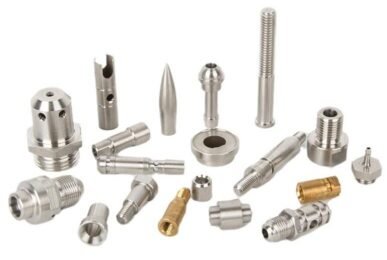
Low-Volume Production Benefits Startups
Low-volume production is quietly emerging as a practical shortcut for startups to turn ideas into tangible products without deplet...
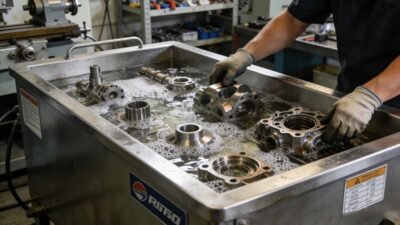
Precision Cleaning: The Critical Role of Ultrasonics in CNC Machined Parts
Precision is the core of CNC machining. However, after milling, turning, or drilling, machined parts typically contain residues—cu...
OEM, ODM, and JDM in Modern Manufacturing
In today's global manufacturing landscape, the relationships between designers, technical developers, and production partners are ...
Development Trends and Innovations of Precision Machining Tools
In the unremitting pursuit of higher precision, superior surface finish, and more efficient machining of increasingly complex mate...
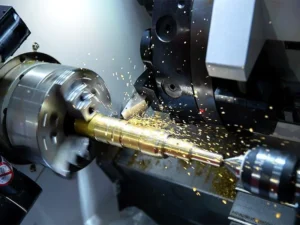
Datum in Geometric Dimensioning and Tolerancing
Geometric Dimensioning and Tolerancing (GD&T) is a crucial tool in the engineering field. It ensures that the assembly and fun...
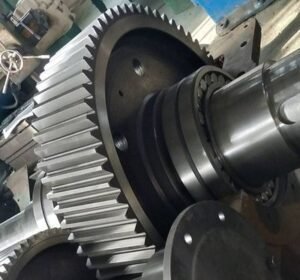
CNC Precision Machining for Automotive Industry: Driving Safety, Efficiency & Electrification
The automotive industry is undergoing a profound transformation, with a dual focus on enhancing driving safety, improving fuel eff...
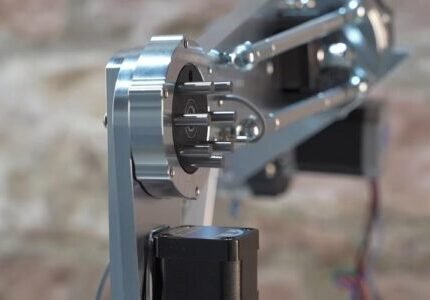
CNC Precision Machining for Robotics Manufacturing: Powering High-Accuracy Motion & Reliability
The robotics industry is evolving at a rapid pace, with demands for greater precision, flexibility, and durability across industri...

CNC Precision Machining for Energy Equipment Industry: Powering Reliable & Efficient Energy Solutions
The global energy transition, coupled with the demand for stable, efficient energy supply, has raised unprecedented standards for ...
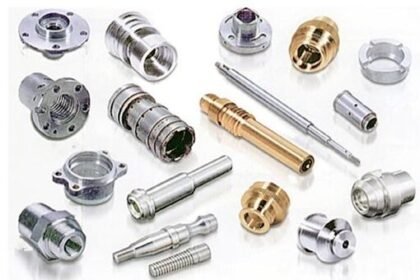
CNC Machining in the Electronics & Telecommunications Industry: Precision for Connected Technologies
The electronics & telecommunications industry is driven by relentless innovation toward miniaturization, high performance, and...