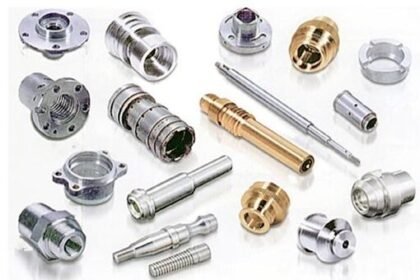
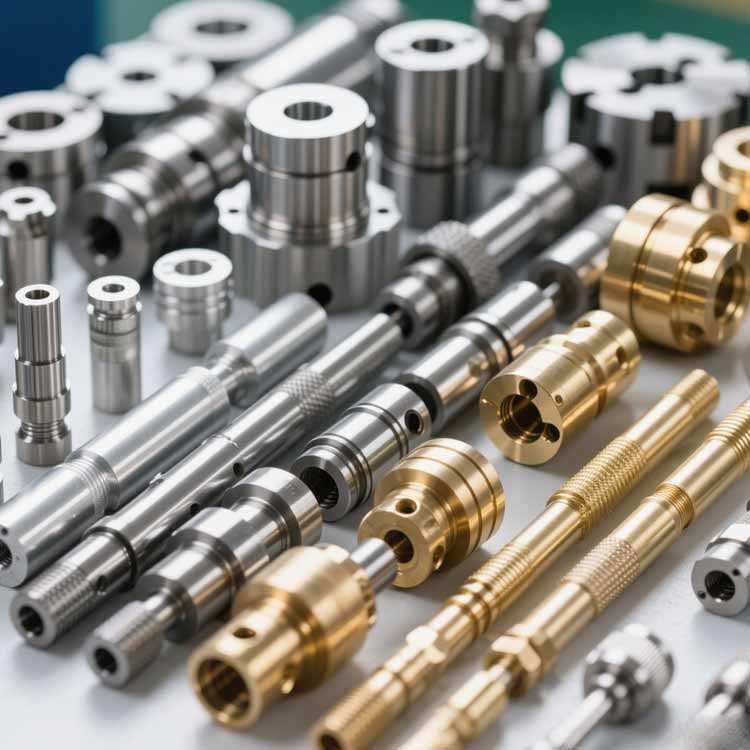
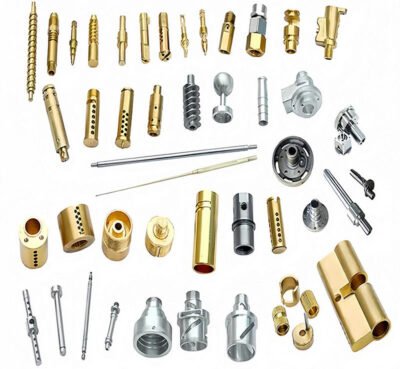
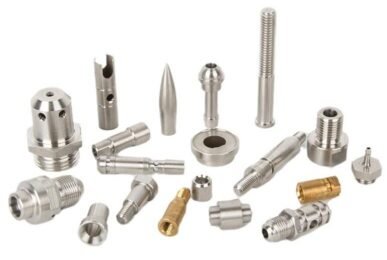
The electronics & telecommunications industry is driven by relentless innovation toward miniaturization, high performance, and seamless connectivity—demands that make CNC (Computer Numerical Control) machining an essential manufacturing pillar. From 5G base station components to smartphone precision parts and data center hardware, CNC machining delivers the ultra-precise, consistent, and reliable components that power modern connected technologies. This blog explores the critical role of CNC machining in this sector, core industry requirements, key technologies, typical applications, and quality assurance frameworks.
Core Requirements for Electronics & Telecom-Grade CNC Machining
Electronics and telecom components are characterized by small sizes, complex micro-features, and strict performance stability needs. CNC machining in this industry must adhere to four core requirements to meet application demands:
Ultra-Precision & Miniaturization: Critical tolerances as tight as ±0.001mm, with the ability to machine micro-features (e.g., φ0.05mm micro-holes, 0.03mm-wide micro-grooves). This supports the miniaturization of devices like 5G chipsets and smartphone camera modules.
Material Versatility: Proficiency in machining diverse materials tailored to electronic applications, including aluminum alloys (for lightweight housings), copper (for high conductivity), engineering plastics (PC/ABS for casings), and ceramic composites (for heat resistance in high-power devices).
High Batch Consistency: Consistent quality across mass production runs (10,000+ units) to ensure interoperability of electronic components. Dimensional deviation between batches must be ≤±0.002mm.
Electromagnetic Compatibility (EMC) Compliance: Machined surfaces and structures must support EMC requirements, avoiding signal interference in 5G, Wi-Fi, and other wireless communication devices. Precision grounding features and shielding structures are critical.
Key CNC Machining Technologies for Electronics & Telecom
The unique characteristics of electronics and telecom components—small size, complex micro-geometries, and high conductivity/heat resistance demands—drive the adoption of specialized CNC technologies:
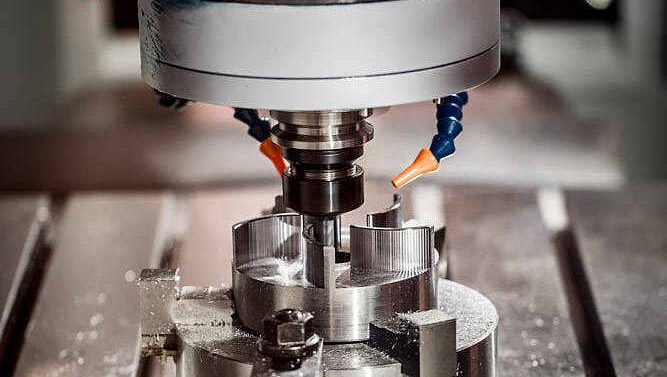
1. High-Speed Precision CNC Machining
Applicable to: Smartphone middle frames, 5G antenna brackets, data center connector housings. Core Advantages: Cutting speeds up to 600m/min reduce machining time by 40-60% for mass production. Minimizes thermal deformation of thin-walled components (wall thickness ≥0.1mm), ensuring dimensional stability.
2. Five-Axis Simultaneous Machining
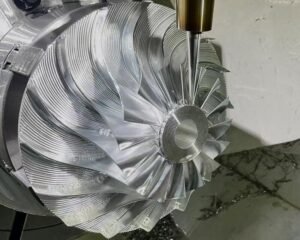
Applicable to: Complex 5G filter components, camera lens mounts, telecom base station waveguide parts. Core Advantages: Single-setup machining of multi-angle and curved surfaces eliminates cumulative positioning errors. Achieves contour precision of ±0.0015mm, critical for optimal signal transmission in telecom devices.
3. Micro-Nano CNC Machining
Applicable to: Micro-electromechanical systems (MEMS), 5G chip carriers, fiber optic connectors. Core Advantages: Capable of machining sub-micron features (down to 0.01mm) with surface roughness Ra≤0.02μm. Ensures tight tolerances for high-precision electronic contacts and signal transmissionCore Ad
4. Precision Post-Processing Technologies
Core Processes: Electropolishing (for copper components to enhance conductivity), anodizing (for aluminum housings to improve corrosion resistance), and laser engraving (for precision grounding marks). Core Advantages: Enhances surface performance, supports EMC compliance, and improves aesthetic quality for consumer electronics.
Typical Applications of CNC Machining in Electronics & Telecom
1. 5G Communication Equipment
Representative Products: 5G base station filters, antenna brackets, waveguide components, RF connectors. Key Highlights: Machined from aluminum alloys and copper; precision control of cavity dimensions (tolerance ±0.001mm) to ensure signal integrity. EMC-compliant structures prevent cross-talk between components.
2. Consumer Electronics
Representative Products: Smartphone middle frames and camera modules, laptop chassis, smartwatch components. Key Highlights: High-speed machining for mass production; thin-walled structure optimization (weight reduction by 20-30%); anodized or polished surfaces for aesthetics and durability.
3. Data Center & Fiber Optics
Representative Products: Server heat sinks, fiber optic connectors, data transmission cable ends. Key Highlights: Machined from copper and aluminum for high thermal conductivity; micro-precision features for fiber optic alignment (tolerance ≤±0.0005mm); corrosion-resistant post-processing for long-term reliability in data centers.
Quality Control & Compliance in Electronics & Telecom CNC Machining
Success in electronics and telecom CNC machining relies on strict quality control and compliance with industry standards:
In-Process Monitoring: Real-time inspection via automated CMM (Coordinate Measuring Machine) and optical measurement systems. 100% inspection of critical features for high-precision components.
Material Validation: Raw materials must meet industry standards (e.g., AMS 6061 for aluminum, ASTM B152 for copper) with 100% compositional testing to ensure conductivity and heat resistance.
Compliance Certifications: Adherence to ISO 9001 (quality management) and RoHS (restriction of hazardous substances) for consumer electronics. EMC testing per IEC 61000 standards for telecom devices.
Traceability: Comprehensive data logging of machining parameters, material batches, and testing results to support product recalls and quality audits.
Conclusion
CNC machining is a cornerstone of innovation in the electronics & telecommunications industry, enabling the miniaturization, high performance, and connectivity of modern technologies. As 5G deployment expands, IoT (Internet of Things) devices proliferate, and data centers scale, CNC machining will continue to evolve—with greater integration of AI-driven process optimization and micro-nano machining capabilities—to meet the growing demands of connected technologies.
For custom CNC machining needs of electronics & telecom components (e.g., 5G parts, consumer electronics components, data center hardware), we provide tailored solutions covering material selection, process routing, and compliance assurance. Contact us to discuss your project requirements.