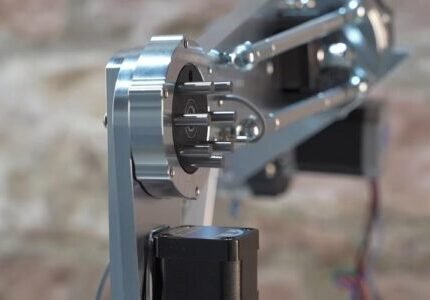
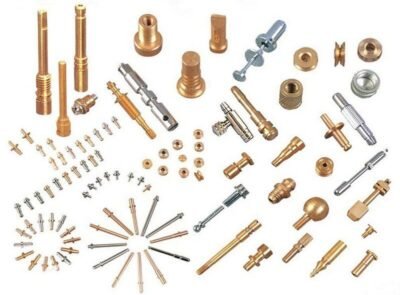
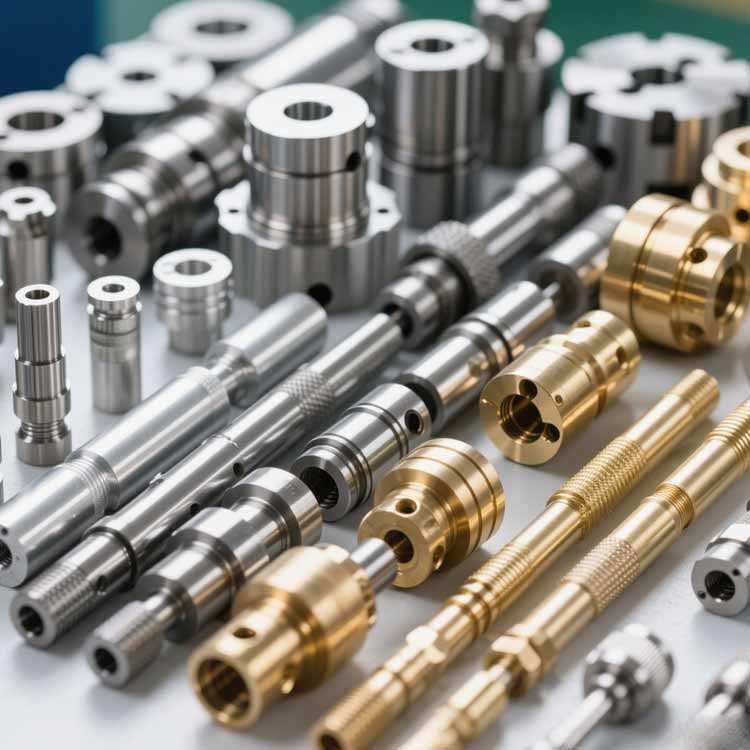
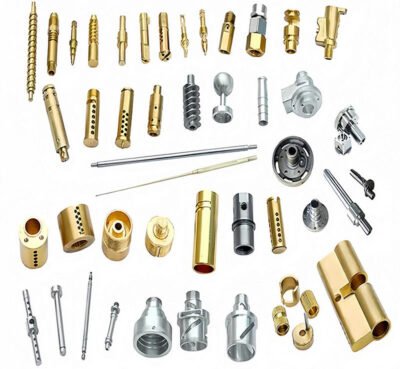
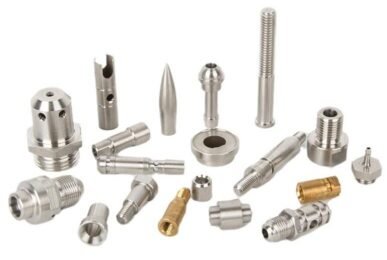
The robotics industry is evolving at a rapid pace, with demands for greater precision, flexibility, and durability across industrial, collaborative, and service robot segments. CNC (Computer Numerical Control) precision machining stands as a foundational technology in robotics manufacturing, enabling the production of critical components that drive smooth motion, precise positioning, and long-term operational reliability. From robot joints and reducers to end effectors and sensor mounts, CNC machining transforms design concepts into high-performance parts tailored to the unique needs of robotic systems. This blog explores the pivotal role of CNC precision machining in robotics manufacturing, core technical requirements, key technologies, typical applications, and rigorous quality assurance frameworks.
Core Requirements for CNC Precision Machining in Robotics
Robotic components are tasked with repetitive, high-precision motion under varying loads, making CNC machining in this industry subject to four non-negotiable core requirements:
Ultra-High Precision & Repeatability: Critical tolerances as tight as ±0.001mm, with strict control over geometric accuracy (e.g., coaxiality ≤0.002mm for robot joint shafts). Components must ensure consistent repeat positioning accuracy (≤±0.01mm) to support precise robotic operations.
Lightweight & High-Strength Material Compatibility: Proficiency in machining lightweight yet durable materials, including aluminum alloys (6061, 7075 for robot arms), titanium alloys (for high-load joints), engineering plastics (PC/ABS for protective casings), and hardened steels (for reducers and gears).
Batch Consistency & Scalability: Uniform quality across mass production runs (10,000+ units) to ensure interchangeability of robotic components. Dimensional deviation between batches must be ≤±0.002mm to maintain assembly efficiency.
Low Friction & Wear Resistance: Machined surfaces and contact points must have low friction (surface roughness Ra≤0.02μm) and high wear resistance to extend the lifespan of moving parts (e.g., joints, gears) under continuous operation.
Key CNC Precision Machining Technologies for Robotics
The complex geometries, high-precision motion demands, and diverse material requirements of robotic components drive the adoption of advanced, specialized CNC machining technologies:
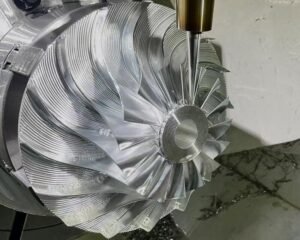
1. Five-Axis Simultaneous Machining
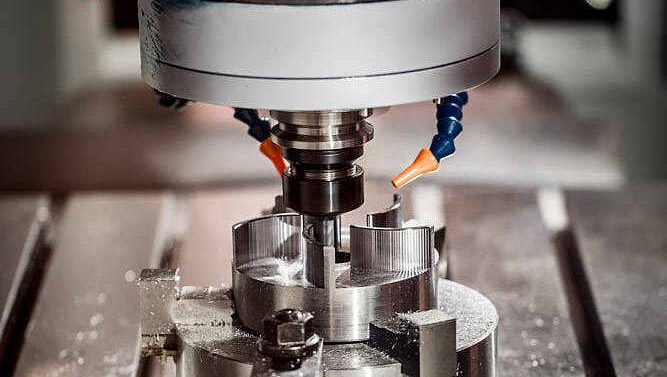
Applicable to: Robot joint modules, harmonic reducer casings, complex end effectors, and curved arm components. Core Advantages: Single-setup machining of multi-angle, curved, and asymmetric features eliminates cumulative positioning errors. Achieves contour precision of ±0.0015mm, ensuring optimal fit and motion smoothness of robotic joints.
2. High-Speed Precision Machining
Applicable to: Mass-produced components (e.g., robot arm links, sensor brackets, connector housings). Core Advantages: Cutting speeds up to 600m/min reduce machining time by 30-50%, enhancing production scalability. Minimizes thermal deformation of thin-walled robotic arm components (wall thickness ≥0.15mm), ensuring dimensional stability.
3. Micro-Nano Precision Machining
Applicable to: Miniature robotic components (e.g., micro-joints for collaborative robots, sensor cores, gear teeth of precision reducers). Core Advantages: Capable of machining micro-features (down to 0.01mm) with ultra-fine surface finish (Ra≤0.01μm), critical for the precision transmission of small-scale robotic systems.
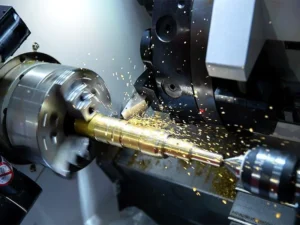
4. Turn-Mill Composite Machining
Applicable to: Robotic shaft components (drive shafts, joint pins), gear shafts, and cylindrical end effectors. Core Advantages: Integrates turning, milling, drilling, and tapping in one setup, reducing handling times and improving coaxiality (≤0.002mm). Ensures consistent quality for high-precision rotating components.
5. Precision Post-Processing Technologies
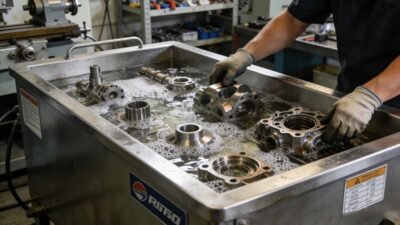
Core Processes: Electropolishing (for reducing friction), anodizing (for aluminum components to improve corrosion resistance), nitriding (for steel gears to enhance wear resistance), and precision grinding. Core Advantages: Enhances surface performance, extends component lifespan, and supports the low-maintenance requirements of robotic systems.
Typical Applications of CNC Precision Machining in Robotics
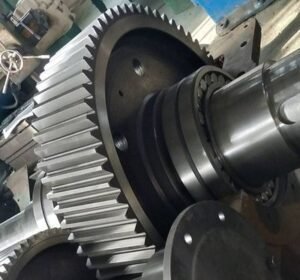
1. Robot Joint & Reducer Components
Representative Products: Harmonic reducer casings, planetary gear sets, joint shafts, and bearing seats. Key Highlights: Machined from hardened steel and aluminum alloys via five-axis and turn-mill composite machining. Strict control of gear tooth profile accuracy (tolerance ±0.001mm) and coaxiality to ensure smooth, precise motion transmission.
2. Robot Arm & Structural Components
Representative Products: Lightweight arm links, wrist modules, and base frames. Key Highlights: High-speed machining of aluminum alloys for weight reduction (30-40% lighter than traditional steel components); optimized thin-walled structures for strength-to-weight ratio; anodized surfaces for corrosion resistance in industrial environments.
3. End Effectors & Grippers
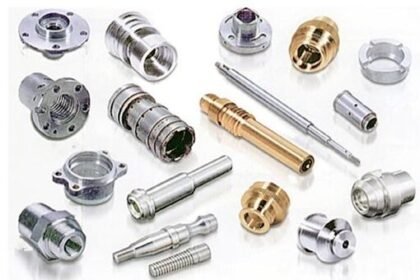
Representative Products: Precision gripper jaws, suction cup mounts, and custom end effector tooling. Key Highlights: Micro-nano machining for fine gripping features; material versatility (plastics for delicate handling, steel for heavy-load applications); compatibility with modular robotic systems via precision-drilled mounting holes (tolerance ±0.001mm).
4. Sensor & Electronic Components
Representative Products: Sensor housings, encoder mounts, and wiring ducts. Key Highlights: Machined from lightweight plastics and aluminum; micro-precision features for sensor alignment (tolerance ≤±0.0005mm); EMC-compliant structures to avoid signal interference with robotic control systems.
Quality Control & Compliance in Robotics CNC Machining
Success in robotics CNC machining relies on advanced technology paired with rigorous, end-to-end quality control and industry compliance:
Material Certification: All raw materials require industry-grade certification (e.g., AMS 6061 for aluminum, ASTM A29 for alloy steel) with 100% compositional testing to ensure strength and durability.
In-Process Monitoring: Real-time inspection via automated CMM (Coordinate Measuring Machine), laser interferometers, and optical measurement systems. 100% inspection of critical features (e.g., joint shafts, gear teeth) to ensure precision.
Finished Product Validation: Fatigue testing (for moving components), friction/wear testing, and dimensional stability testing under temperature variations. Compliance with ISO 9001 (quality management) and ISO 13485 (for medical robotics).
Traceability: Comprehensive data logging of material batches, machining parameters, tooling usage, and testing results—ensuring full traceability for every component to support robotic system maintenance and quality audits.
Conclusion
CNC precision machining is an indispensable enabler of innovation in the robotics industry, providing the high-precision, reliable components that underpin the performance of industrial, collaborative, and service robots. As robotics technology advances toward greater autonomy, miniaturization, and human-robot interaction, CNC machining will continue to evolve—with greater integration of digital twin technology, AI-driven process optimization, and multi-material machining capabilities—to meet the industry’s growing demands.
For custom CNC precision machining needs of robotic components (e.g., joint modules, reducers, end effectors), we provide tailored solutions covering material selection, process routing, and full industry compliance. Contact us to discuss your project requirements.