In the unremitting pursuit of higher precision, superior surface finish, and more efficient machining of increasingly complex materials, the field of precision manufacturing is constantly evolving. At the core of all these advancements lies the cutting tool itself. Modern tools are no longer simple consumables but highly engineered, data-driven components that are crucial to the success of any advanced machining operation.
Several key trends and innovations are defining the future of tools, continuously pushing the limits of speed, precision, and intelligence in the workshop.
Demand for Faster Speed and Higher Precision
Minimizing CNC machining costs requires higher material removal rates and longer tool life. To reduce machining time, modern machine tools feature faster spindle speeds and higher feed rates. Additionally, modern machine tools adopt a more robust structure to withstand greater loads.
Meanwhile, product design teams aim to enhance collaboration and reduce variations between parts to achieve more efficient and stable operation. They also expect parts to be made of harder, more durable materials to extend service life, which simultaneously increases machining difficulty. Consequently, tolerance requirements for many metal components are becoming increasingly stringent, and greater attention is being paid to surface finish.
Challenges at the Tool Tip
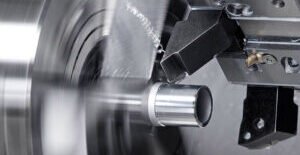
The faster the cutting speed, the more heat is generated. Higher friction on the surface of the cutting tool makes it more prone to chip formation and corrosion, resulting in a higher wear rate. The higher the chip generation rate, the greater the challenges in chip breaking and chip disposal.
Other issues include deformation caused by thermal expansion and increased cutting forces, which typically reduce precision and surface smoothness.
1. Advanced Materials and Complex Geometries
The foundation of any excellent tool lies in its material. While tungsten carbide remains the cornerstone, innovations lie in the development of new, highly specialized tungsten carbide grades and the use of alternative materials to address specific challenges.
Microcrystalline and Nanocomposite Carbides: Metallurgists are developing carbide substrates with ultra-fine grain structures. These microcrystalline and nanoscale carbides combine excellent hardness and toughness, enabling superior edge retention for finish machining of special alloys and effective resistance to micro-chipping commonly encountered in high-speed machining.
Advanced Ceramics: For machining hardened steel and superalloys (such as Inconel), advanced ceramics (such as silicon nitride and SiAlON) can significantly increase cutting speeds. These materials maintain hardness even at extreme temperatures where carbide fails, making “hard turning” and “hard milling” viable alternatives to slower grinding processes.
Optimized Geometries: With the help of advanced simulation software (Finite Element Analysis), tool manufacturers can design complex flute shapes, variable helix angles, and variable pitch end mills with inherent stability. These designs can suppress harmonic vibrations that cause chatter, thereby enabling deeper cutting depths, faster feed rates, and significantly improved surface finish, even in long-travel machining.
2. The Revolution of Intelligent Coatings
Modern tool coatings are far more than simple protective layers; they are complex multi-layer nanocomposite structures designed for specific applications. The trend is shifting from general-purpose coatings to highly customized solutions.
High-Entropy Alloy (HEA) Coatings: As a breakthrough in materials science, HEA coatings consist of multiple principal elements. This highly stable and dense structure combines high hardness, excellent thermal stability, and superior wear resistance, making it an ideal choice for extreme conditions such as machining titanium alloys and other aerospace alloys.
Adaptive Coatings and “Chameleon” Coatings: The next frontier is the development of adaptive coatings. Such materials can subtly change their properties at the tool-chip interface based on cutting temperature. For example, a coating may exhibit a low coefficient of friction at moderate temperatures but form a hard protective oxide layer at extremely high temperatures, thereby effectively adapting to changes in cutting conditions.
Diamond Coatings for the Digital World: With the increasing application of Carbon Fiber Reinforced Polymers (CFRP) in the aerospace and automotive industries, tools with Chemical Vapor Deposition (CVD) diamond coatings have become crucial. The focus of innovation is on improving the adhesion of these ultra-hard coatings to carbide substrates, thereby significantly extending tool life when machining these highly abrasive composite materials.
3. Tools in the Industry 4.0 Era: Smart Connectivity
The biggest transformation in the tool field lies in its integration with the digital manufacturing ecosystem. “Smart tools” are building a closed loop between physical cutting and digital control systems.
Tools with Embedded Sensors: Tool holders, and in some cases the tools themselves, are embedded with micro-sensors to provide real-time data on key parameters such as temperature, vibration, and cutting forces. This data can be directly transmitted to the CNC system or monitoring system.
Predictive Analytics and Artificial Intelligence: By inputting this real-time data into an artificial intelligence-driven analysis platform, manufacturers can shift from reactive maintenance to predictive maintenance. The system can accurately predict when a tool is about to fail, allowing for planned replacement before the tool is damaged or affects part quality. It can also automatically adjust feed rates and spindle speeds “in real time” to reduce chatter or avoid tool overload.
Digital Twin: Each smart tool can have a “digital twin”—a virtual model that exists in the system. This twin model tracks the entire lifecycle of the tool, from initial setup and precise measurement to accumulated wear and performance history, ensuring that process planners always use accurate real-world data.
4. Additive Manufacturing: Printing the Perfect Tool
Additive manufacturing, or 3D printing, is revolutionizing the design and manufacturing of tools, enabling functionalities that were impossible with traditional methods.
Conformal Cooling Channels: For solid carbide or steel tool bodies, 3D printing technology can create complex conformal cooling channels located beneath the cutting edge. This allows high-pressure coolant to be precisely delivered to the heat-generating points, thereby significantly improving chip evacuation, extending tool life, and increasing cutting speeds, especially in deep hole drilling and machining of heat-resistant alloys.
On-Demand Custom Molds: Additive manufacturing technology makes it possible to produce highly specialized custom molds for specific applications at a significantly reduced cost. Complex contour molds that used to take weeks of custom grinding to complete can now be designed and printed in just a few days, thereby accelerating the development cycle of new components.
Conclusion
Tools are no longer isolated and passive links in the machining process but are becoming active, intelligent, and highly engineered strategic assets. The integration of advanced materials, intelligent coatings, embedded sensors, and additive manufacturing technologies is spawning a new generation of tools that are not only sharper and harder but also smarter. For precision manufacturers, harnessing these innovations is no longer an option but a key to remaining competitive in an increasingly fierce and data-driven industry.