Aluminum is a relatively new industrial metal with a commercial production history of over 100 years. It is soft, durable, lightweight, and highly malleable, allowing it to be formed into almost any shape. Its appearance ranges from silver to dark gray, depending on the surface roughness. Aluminum is non-magnetic, non-flammable, and an excellent conductor of heat and electricity.
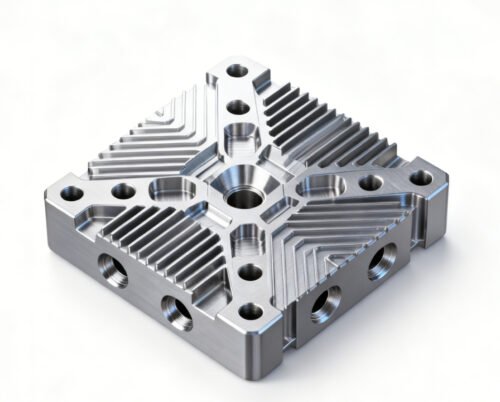
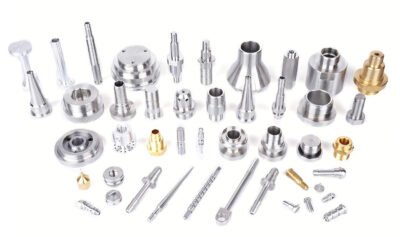
Precision-machined aluminum parts have become the first choice in numerous industries. Thanks to its superior mechanical properties, aluminum is one of the most popular materials, including cost-effectiveness, flexibility, durability, and corrosion resistance. Today, precision-machined aluminum parts are increasingly used in automotive, aerospace, military, medical, and industrial engineering fields.
In this article, we will elaborate on CNC machined aluminum alloy parts, including common aluminum alloy grades, advantages, and applications.
Aluminum Grades
In manufacturing, pure aluminum is rarely used. Pure aluminum is soft and has limited strength, which is insufficient in hardness and strength for most industrial applications. Therefore, manufacturers usually add small amounts of elements such as boron, copper, lithium, magnesium, manganese, silicon, tin, and zinc to enhance aluminum's strength and rigidity. The strength of aluminum alloys can be up to thirty times that of pure aluminum while retaining other desired properties.
Below are some commonly used aluminum grades for your selection based on specific needs:
2024 Aluminum Alloy
Due to its excellent mechanical properties such as high fatigue resistance, high strength, and thermal shock resistance, 2024 aluminum alloy is widely used in aerospace and military fields, such as aircraft wings, spars, and tensile structures. However, 2024 aluminum alloy has poor corrosion resistance and is non-weldable.
6063 Aluminum Alloy
It possesses excellent mechanical properties, including ease of welding, heat treatment, and durability. But without heat treatment, the strength near the weld may decrease significantly. 6063 aluminum alloy is commonly used for aluminum extrusion. This alloy is typically employed in manufacturing complex shapes with smooth surfaces, such as door frames, window frames, sign frames, and roofing.
6061 Aluminum Alloy
6061 aluminum alloy is a precipitation-hardening aluminum alloy with magnesium and silicon as the main alloying elements. It has good toughness, medium to high strength, excellent mechanical properties, superior corrosion resistance in harsh environments, ease of anodizing, and good machinability and weldability. Thus, extrusion is very common (second only to 6063). This grade is one of the most widely used aluminum alloy grades. 6061 aluminum alloy is one of the most commonly used alloys in 5-axis precision machining in CNC workshops, mainly used in manufacturing aircraft, ships, automotive parts, and bicycles.
7075 Aluminum Alloy
7075 aluminum alloy is another commonly used aluminum alloy next to 6061. With zinc as the main alloying element, it has high strength comparable to many steels, excellent fatigue strength, and medium machinability. However, it is non-weldable and has limited corrosion resistance. In most cases, oil-based lubricants are required for machining.
The cost of this aluminum alloy is higher than other aluminum alloys, and its relatively high cost limits its use in applications where cheap alloys are not suitable. It is most commonly used in manufacturing high-strength components such as aircraft wings and fuselages, bicycle parts, climbing equipment, and aircraft wings.
5052 Aluminum Alloy
5052 aluminum alloy is a non-heat-treatable alloy and one of the most commonly used aluminum alloys in sheet metal manufacturing. It is easy to bend, stamp, and cut into desired shapes, has strong corrosion resistance, can well resist marine and saltwater erosion, and is suitable for various industrial environments. Therefore, it is often used in marine and aircraft equipment, street lights, gas stations, and guardrails.
Advantages of CNC Machined Aluminum Parts
Low Melting Point
Steel and aluminum have been popular for many years. Each of these metals has advantages that make them ideal for various industrial applications. In terms of durability, steel and aluminum are the most commonly used materials. However, if temperature changes are involved in the application process, steel is not the best choice. For example, steel cannot withstand high welding temperatures or extremely low temperatures.
The actual melting and casting temperatures of aluminum depend on other metals mixed in the alloy, but the casting temperature of aluminum alloys is usually less than half that of iron alloys (such as steel and other iron-containing alloys).
Due to the low melting point of aluminum alloys, their casting process consumes less energy than iron alloys. The solidification time is also shortened, thereby improving factory production efficiency and further reducing costs.
Excellent Strength-to-Weight Ratio
Over the years, the demand for aluminum parts has continued to grow due to their extremely high strength-to-weight ratio. This material is strong, lightweight, and has a much lower density than steel. This means that aluminum finished products of the same shape are much lighter than steel finished products. The density of aluminum is about 2.5 times that of steel. Although aluminum is not as hard as steel, its lightweight design gives it high flexibility.
These two characteristics make it an ideal material for manufacturing key components in the automotive and aerospace industries.
Easy to Machine
Unlike steel, aluminum is easy to rotate during machining and can be easily manufactured into required parts through stamping, bending, and drilling without losing its material properties. You can process it into parts of various shapes as needed. Compared with steel, aluminum machining requires much less energy.
Customizable Surface Treatment
Aluminum can be customized according to customer requirements. You can process it to have a perfect personalized appearance. CNC machined aluminum alloy parts can be electroplated in various colors as required. For example, it can be electroplated green, black, blue, or any other desired color.
The CNC machining process of aluminum undergoes multiple changes, especially in terms of design and specifications, which enables it to transition flexibly and quickly by simply starting a reviewed and approved new program. In addition, if necessary, you can revert to the previous program at any time and reliably produce qualified aluminum machined parts.
Recyclable
Aluminum machined parts are easy to recycle, which promotes their wider application in industrial applications. If your company wants to reduce its carbon footprint, CNC machined aluminum parts are an ideal choice. As we all know, CNC machining is a subtractive manufacturing process that generates a lot of material waste due to cutting. These wastes can be recycled to manufacture higher-quality products.
Superior Corrosion Resistance
Parts made of aluminum through CNC machining can be used in various applications susceptible to corrosive environments. Aluminum has relatively good corrosion resistance. If the product is affected by weather and environmental factors, aluminum will form a relatively stable oxide layer to prevent further reaction with oxygen. If the aluminum surface is damaged, this oxide layer can be "repaired" and re-formed almost immediately.
However, their corrosion resistance varies by grade. For example, grade 6061 is known for its excellent corrosion resistance.
Excellent Electrical Conductivity
CNC machined aluminum parts also have good electrical conductivity, so they are also used in electrical applications. Although the conductivity of aluminum may not be as good as copper, it is superior to steel or other commonly used machining materials.
Applications of Aluminum Machined Parts
Combining light weight, high strength, and high ductility, aluminum is an ideal material for the transportation industry. It is widely used in automobiles, aircraft, railways, and ships, as well as in manufacturing energy-efficient engines for cars and trucks. The lightweight design helps reduce fuel consumption and emissions.
Aluminum contributes to the construction of low-cost, corrosion-resistant buildings. Various aluminum products can be used in new construction or renovation projects, and due to their high strength and light weight, they are also suitable for earthquake-prone areas.
It is a good light reflector and is usually used in lighting equipment.
In traffic accidents, a large part of the impact force on the car is mainly absorbed by its aluminum structure.
High-strength aluminum alloys can withstand extreme pressures generated during high-altitude flight. Thin aluminum sheets can prevent cold air and exhaust gas from entering. Many internal accessories of aircraft (such as seats) are made of aluminum or aluminum composites to reduce weight, thereby saving fuel, reducing emissions, and increasing the effective load of the aircraft.
Aluminum cookware is easy to lift, requires much less heat than stainless steel or cast iron cookware, and the tableware can heat up quickly and evenly.
Aluminum can be drawn into thin wires and is often used in products such as light bulbs and telephone wires.
Although aluminum machining is not difficult, if you need to purchase CNC machined aluminum parts for aerospace, military, or defense projects, choosing the right CNC machine tool supplier is crucial. SANS specializes in CNC aluminum machining and has long provided precision-machined CNC parts to customers in various industries. We offer a variety of CNC machining services, including precision machining, CNC milling and turning, grinding, wire EDM, and part assembly.