The True Cost of Scrap and the Power of Process Control
Scrap rarely stems from a single major mistake. Instead, it’s often the accumulation of small errors: excessive tool wear, fixture deformation under load, CAM paths causing part overheating, or tolerance specifications misaligned with actual functionality. Precision CNC machining addresses these risks by converting tacit knowledge into measurable, auditable steps.
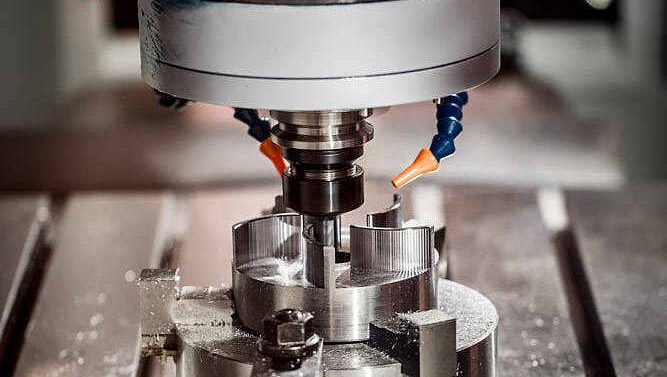
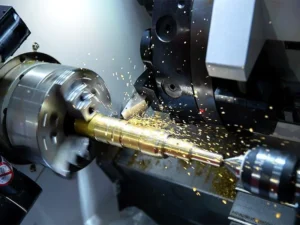
At GD Prototyping, a single programming setup allows for precise replication—covering 3-axis, 3+2-axis, and 5-axis simultaneous milling, as well as CNC turning. Complex geometries are our everyday norm, not the exception. Our shop operates around the clock, thanks to rigorous setup processes, a comprehensive tool library, and process validation. Capability matters: we typically maintain precision within ±0.05mm, and achieve Ra 0.2μm when specified. This level of control eliminates the minor inconsistencies that ultimately lead to large-scale scrap.
Why Precision CNC Machining Boosts Yield
-
Stable Fixturing and Toolpaths: Rigid workpiece clamping and validated CAM strategies prevent chatter, deformation, and out-of-spec features.
-
Closed-Loop Measurement: Critical dimensions are verified via in-process probing before parts leave the vice.
-
Material-Specific Recipes: Feed rates, speeds, tools, and coolants are tailored to each alloy or polymer to avoid overheating, burrs, and deformation.
-
Functional Tolerancing: We adhere to DIN 2768-1 (fine for metals, medium for plastics) and review drawings to align tolerances with functionality.
-
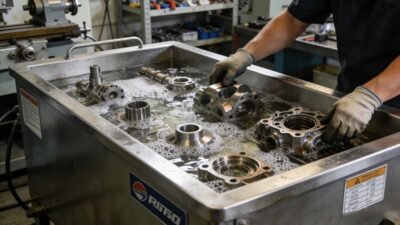
Surface Finish Strategies: When “as-machined” surfaces fall short, finishing operations remove tool marks and stabilize appearance without compromising dimensions.
Reducing variation reduces scrap. Our clients consistently see scrap rates cut in half because we eliminate the root causes of waste from the process—guesswork and deviation.
Speed Without Waste
Tight deadlines often push teams to cut corners on best practices, leading to scrap. We turn this paradigm on its head. Precision CNC machining lets you move projects forward quickly without sacrificing quality, as the same digital workflow is followed from the first part to subsequent orders. You can iterate rapidly in the early stages, then scale with confidence—no hard tooling required, no sunk costs incurred.
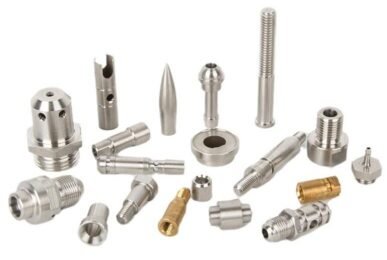
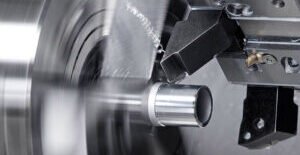
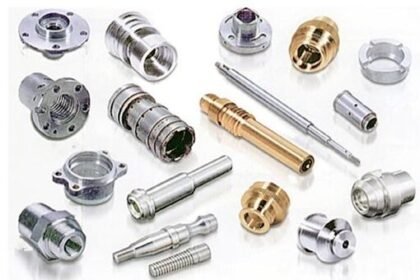
We support 3-axis, 4-axis, 3+2-axis, and 5-axis milling for multi-sided features and chamfering; we also offer CNC turning for precision cylindrical parts with axial/radial holes, flats, grooves, and notches. Whether you need a single functional prototype or thousands of end-use parts, each production run benefits from the previous one, as process knowledge is retained in programs, fixtures, and inspection plans.
Flexible Capacity, Tangible Results You Can Plan Around
-
One-on-one support with fast response: A dedicated project manager will reply within 12 hours.
-
Multiple material and surface treatment options: Aluminum, steel, titanium, copper alloys, and engineering plastics; sandblasting, anodizing, passivation, and more.
-
Quick changeovers: Rapid reprogramming for Engineering Change Orders (ECOs) and late-stage design adjustments—no hard tooling needed.
-
Low-volume, high-mix friendly: Ideal for bridge production and frequent modifications.
-
Consistent reliability: Maintains tight appearance control and strict tolerances across batches.
For New Product Introduction (NPI) teams, time and risk are two critical factors. With high-precision CNC milling services and low-volume CNC machining, you can shorten production cycles while ensuring process standardization. Thus, urgent product launches no longer mean sacrificing quality.
How We Prevent Rework at the Source
Rework drains budgets and time. We eliminate rework by prioritizing quality at every stage of the workflow. Before production begins, our engineers review drawings, Geometric Dimensioning and Tolerancing (GD&T), key quality characteristics, and high-risk areas such as thin walls, deep pockets, tall ribs, or long tool travels. When necessary, we propose minor design adjustments to improve manufacturability, thermal stability, and tool accessibility while preserving functionality. This collaborative approach enhances first-time build quality and carries through every repeat production run.
Our Precision CNC Machining Process for High Yield and Low Scrap
-
DFM and Transparent Quoting: We provide actionable feedback on tolerances, geometry, and material selection. The goal: optimize functionality, cost, and risk without compromising performance.
-
Process Planning and Tooling Strategy: We select appropriate tools, toolholders, and fixtures to protect critical features. CAM paths are validated on standard models; inspection points are focused on the most important features.
-
First Article Inspection (FAI): Parts are measured against drawings, and a complete dimensional report is provided. Measurement results are directly fed back into programs and setup sheets.
-
Production with Unattended Capability: When appropriate, machines can run unattended with in-process probing. This stability is the key to true repeatability.
-
Finishing and Final Inspection: Surface treatments or protective coatings are applied in sequence to avoid dimensional deviations. Final quality control confirms all critical dimensions meet drawing requirements.
-
Documentation, Delivery, and Support: You’ll receive traceable records and clear communication. If you reorder or modify, the same digital assets ensure consistent quality.
✅ What This Means for Your Key Performance Indicators (KPIs)
-
Less scrap: Reduced waste and rework lead to predictable Cpk values.
-
Shorter lead times: No tooling delays; quick changeovers keep production schedules tight.
-
Lower total cost: You only pay for parts that ship—no charges for rework.
-
Better product launches: Stable processes reduce risk during NPI and transition production.
Where to Start?
If a part is currently high-risk—such as thin-walled components, multi-sided machining, intricate curved surfaces, or complex 5-axis features—begin with a pilot production run with us. We’ll apply the same rigorous standards as full-scale production but in a low-volume, fast-turnaround format. This lets you see the impact on scrap rate, yield, and lead time firsthand before scaling up.
Call to Action: Leverage Scrap Reduction in Your Next Project
If scrap, rework, or unpredictability are eroding your profits, let’s change the equation. Contact GD Prototyping to learn about a pilot project using precision CNC machining. You’ll get fast Design for Manufacturing (DFM) feedback, a clear process plan, and a reliable timeline. Start with a single complex part or a high-mix batch, and measure the difference in yield, lead time, and total cost.